Editor’s note: This guest article was written by Dr Sam Jones, Technical Manager at International Pheromone Systems Ltd.
Introduction
Insect pests pose a significant challenge for growers worldwide, reducing crop yields, damaging produce quality, and increasing production costs. At the same time, growing concerns about pesticide resistance, effects on natural predators, and food safety have encouraged a stronger focus on more sustainable pest management strategies.
One of the most effective solutions is Integrated Pest Management (IPM), a strategy that combines multiple techniques to manage pests responsibly. In practice, pheromone monitoring in integrated pest management helps growers detect pest activity early and make more informed decisions.
Rather than reacting only after visible damage appears, monitoring supports earlier detection, better timing, and more targeted responses. Among the available tools, pheromone monitoring is especially valuable because it offers a practical way to track pest activity before outbreaks become more costly.
What Is Integrated Pest Management (IPM)?
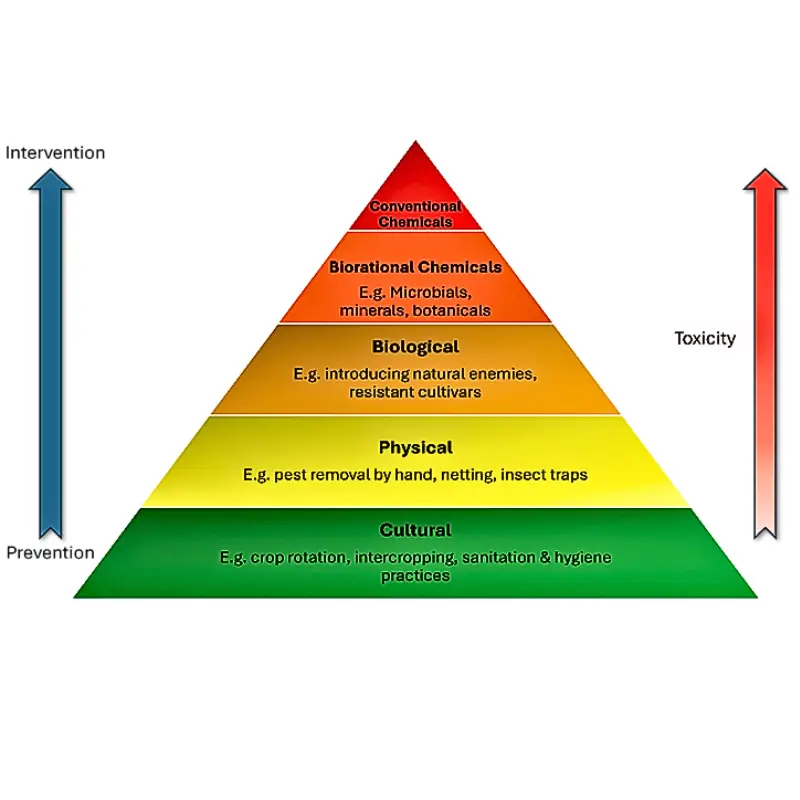
Integrated Pest Management (IPM) is a holistic approach that combines multiple strategies to maintain pest populations below an economically harmful level, rather than relying solely on traditional pesticides.
These strategies include:
Cultural practices – such as crop rotation and habitat management
Biological controls – including resistant crop varieties and natural predators
Physical methods – such as manual pest removal and barriers
Chemical treatments – used only when absolutely necessary and in a targeted way
Overall, the focus of IPM is the long-term prevention of pest outbreaks while maintaining a more balanced and sustainable production system.
Why Pest Monitoring Matters in Integrated Pest Management
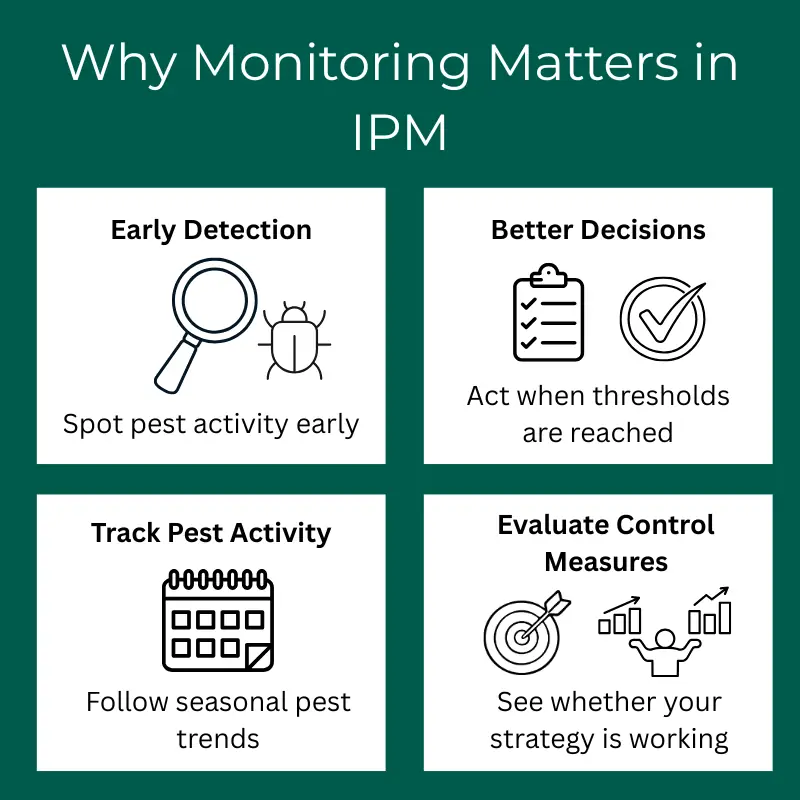
Sir Richard Southwood, the late eminent British entomologist, stated that monitoring is the cornerstone of IPM. This is primarily because it serves several key functions within an effective pest management strategy.
Early Detection
Regular scouting and the use of monitoring traps with lures allow growers to detect pests early. As a result, growers can become more vigilant before infestations escalate.
At this stage, scouting of susceptible crops should be increased for signs of damage, activity such as frass, and early developmental stages including eggs and larvae.
Better Decision-Making
Control becomes necessary only once a pest population surpasses its economic threshold, at which point damage becomes financially significant.
Monitoring with a specific pheromone lure and trap helps track pest activity, with thresholds often based on the number of insects averaged across a set of monitoring traps over a given period.
This more targeted approach helps prevent indiscriminate pesticide application, which can harm natural predator populations and the wider environment.
Tracking Pest Activity
The seasonal pattern, or phenology, of a pest insect can be tracked over the course of a growing season. This allows growers to anticipate periods of greater risk and act more proactively.
Evaluating Control Measures
Monitoring can also provide valuable feedback on the effectiveness of a chosen control strategy. For example, pheromone traps in orchards protected by mating disruption can often indicate whether sufficient communication disruption is taking place.
What Are Pheromones in Pest Monitoring?
Pheromones are chemical signals used between individuals of the same species that trigger a behavioural response. They can produce a range of responses and are therefore grouped into categories such as sex, aggregation, alarm, and oviposition-deterrent pheromones.
In pest management, the most useful types are:
Sex pheromones – released by one sex, usually females, to attract the opposite sex and most commonly encountered in moths
Aggregation pheromones – which attract individuals of both sexes and are more commonly associated with beetles
A high degree of specificity helps prevent the attraction of closely related non-target species. This is achieved either through a single distinct chemical compound or by combining multiple components in a very precise ratio.
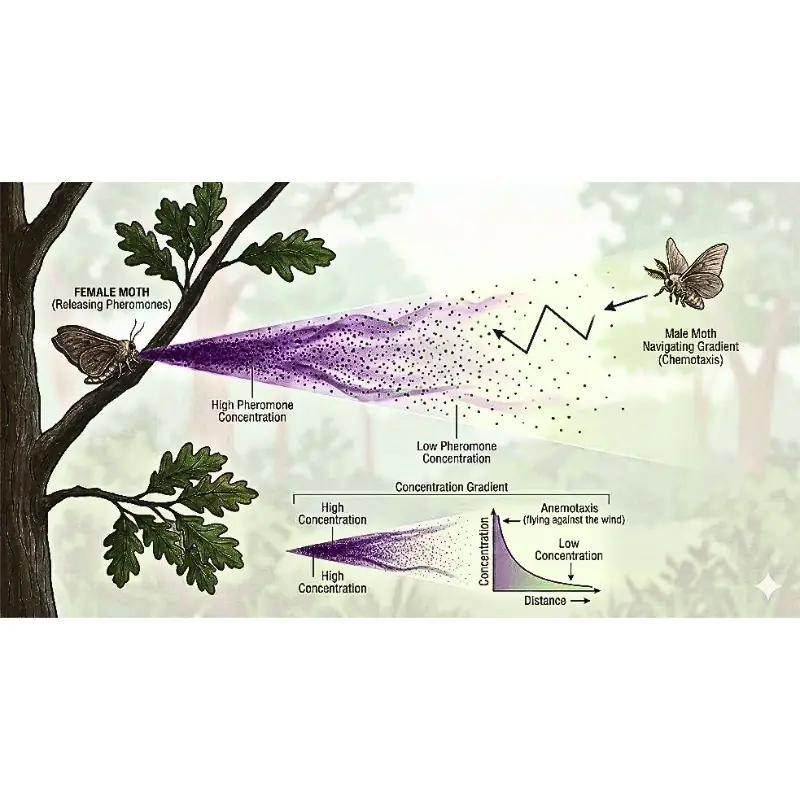
Pheromone receptor neurons and odour-binding proteins on the antennae of male moths are highly tuned to this specific blend and ratio. As a result, male moth antennae are often structurally elaborate.
Sex pheromones guide mate-finding in many moth species. A female releases a pheromone plume of decreasing concentration, and the male zigzags within it while flying upwind towards stronger concentrations.
This specificity, combined with their effectiveness at very low concentrations, makes pheromones highly valuable for monitoring in pest management. Very few non-target species are attracted to well-matched pheromone traps.
How Pheromone Monitoring Works in Pest Management
Understanding what pheromones are is important, but their real value becomes clearer when they are used in practical pest monitoring systems.
Through carefully selected lures and traps, growers can turn these chemical signals into useful field data that supports more informed pest management decisions.
Pheromone monitoring involves placing traps containing lures in areas where pests are likely to be present, such as fields, orchards, glasshouses, and storage facilities. The correct combination of lure and trap is essential for effective monitoring.
Lures
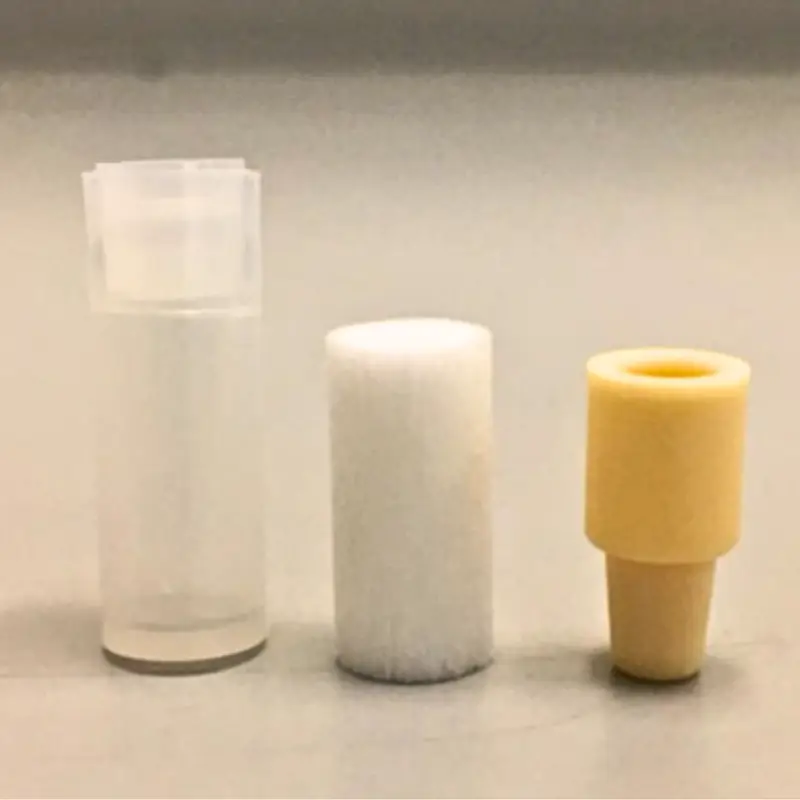
Lures are dispensers designed to slowly release pheromone components over a period of time, attracting individuals of the target species to the trap.
The most common dispenser types include rubber septa, plastic tubes, sachets, and wax-based formulations. The best choice depends on the chemistry of the pheromone components and the desired release rate.
Traps
Selecting the right trap is just as important as choosing the correct lure. The trap must be designed to retain pests either within a container that limits escape or by using a sticky surface to capture attracted insects.
In some situations, attraction can be improved further by choosing traps in a particular colour. In other words, combining visual and olfactory cues can improve performance.
The grower or contractor must also be able to inspect the trap easily and count the insects accurately so that population levels and pest activity can be assessed properly.
The most common trap designs include the following.
Sticky Boards
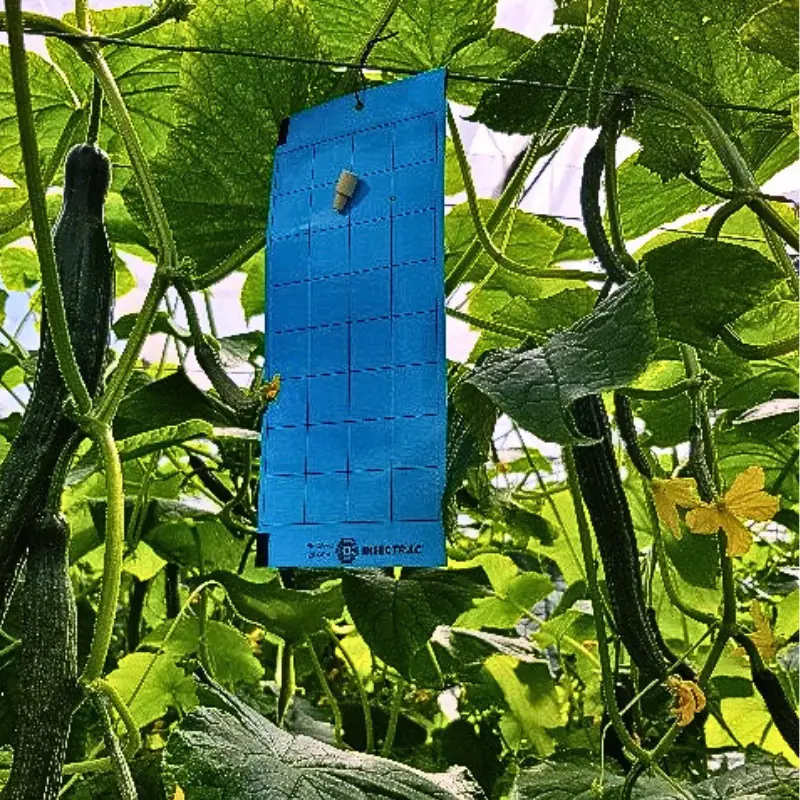
Yellow and blue sticky boards are commonly used in glasshouses. They are especially useful for monitoring pests that do not rely on a useful pheromone lure, such as aphids and whitefly. In these cases, visual attraction is the primary cue.
Blue sticky traps are commonly used for thrips and can also be paired with an aggregation pheromone lure when monitoring the Western Flower Thrips, Frankliniella occidentalis.
Delta Traps
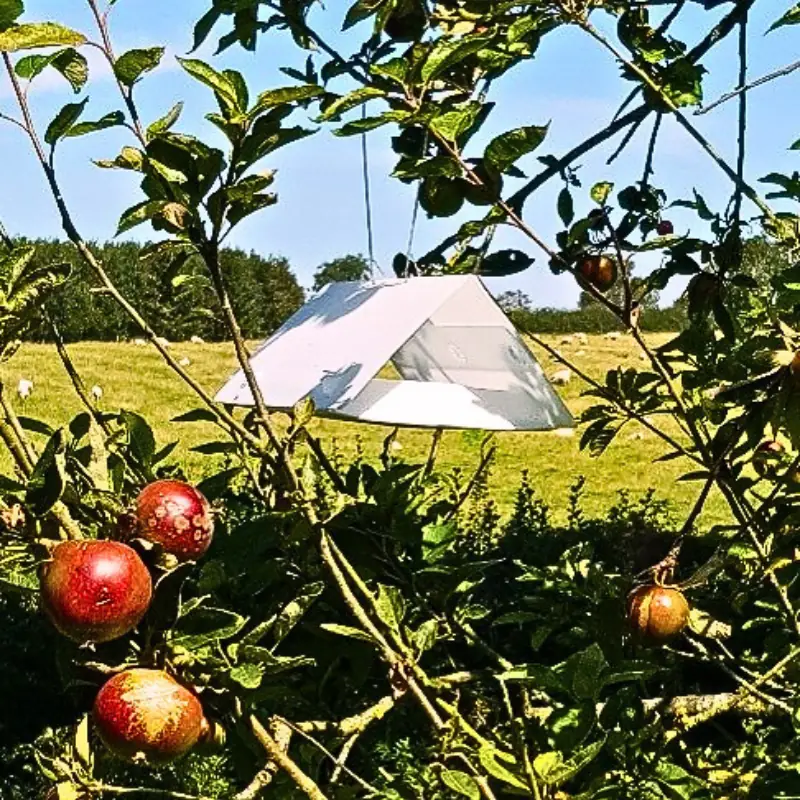
Delta traps are lightweight, tent-like traps with a sticky board inserted at the bottom. These traps are widely used for moth monitoring and are generally easy to inspect and maintain.
Funnel Traps
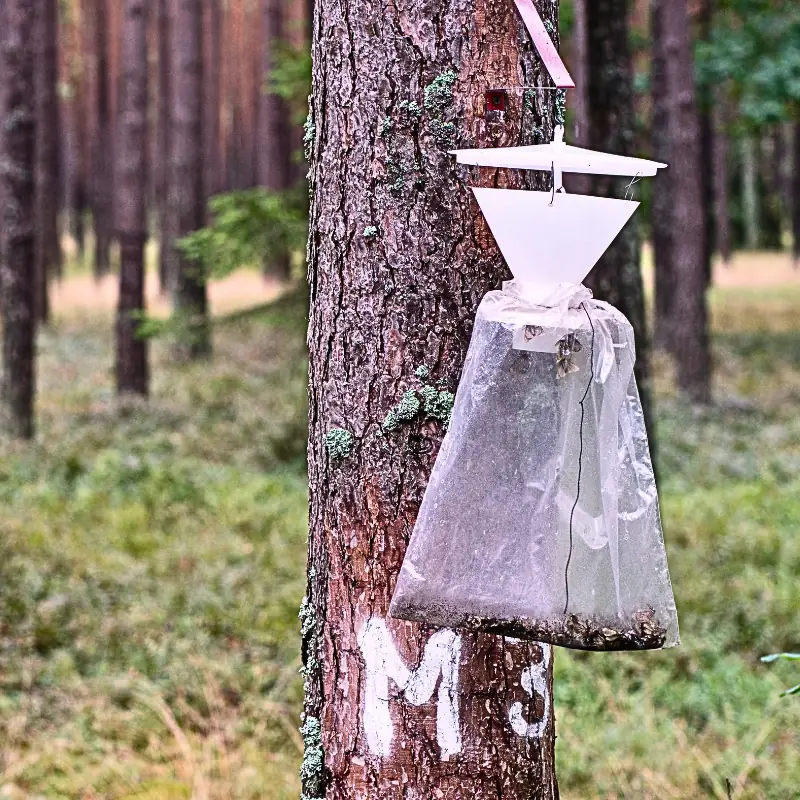
Funnel traps are particularly useful in dusty environments where sticky boards are unsuitable, such as when monitoring stored product moths in food processing units.
In addition, they are also effective for larger moth species that may escape standard sticky boards in delta traps.
Vane Traps
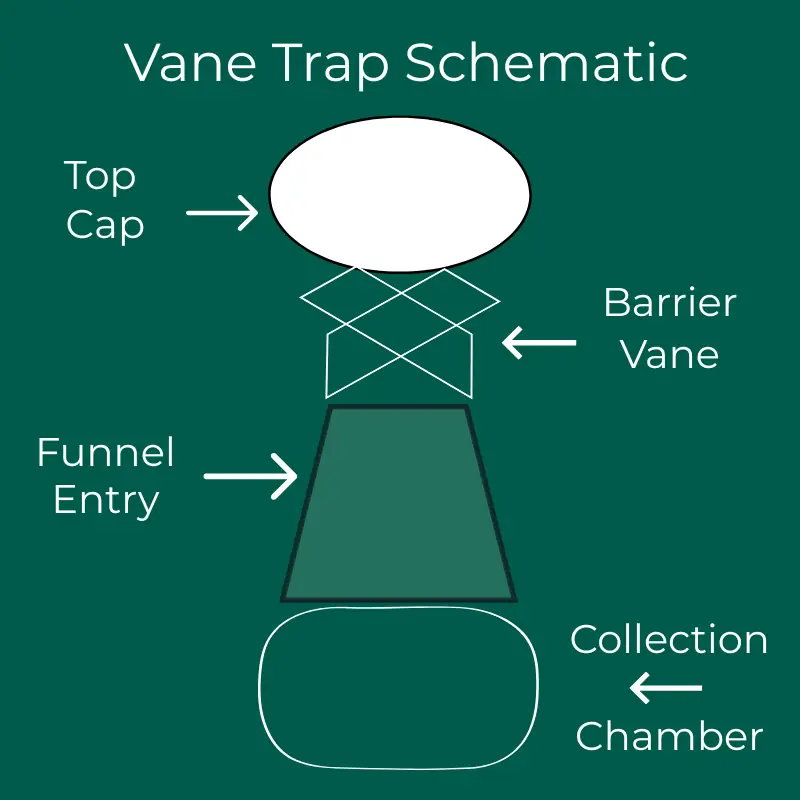
Vane traps incorporate a barrier vane above the funnel to intercept large and clumsy flying species, including some large moths and many beetle pests.
Best Practices for Pheromone Monitoring
However, even the best lure and trap combination can produce misleading results if the monitoring system is poorly managed. Trap position, spacing, inspection routine, and lure replacement all influence how reliable the final data will be.
Trap Positioning
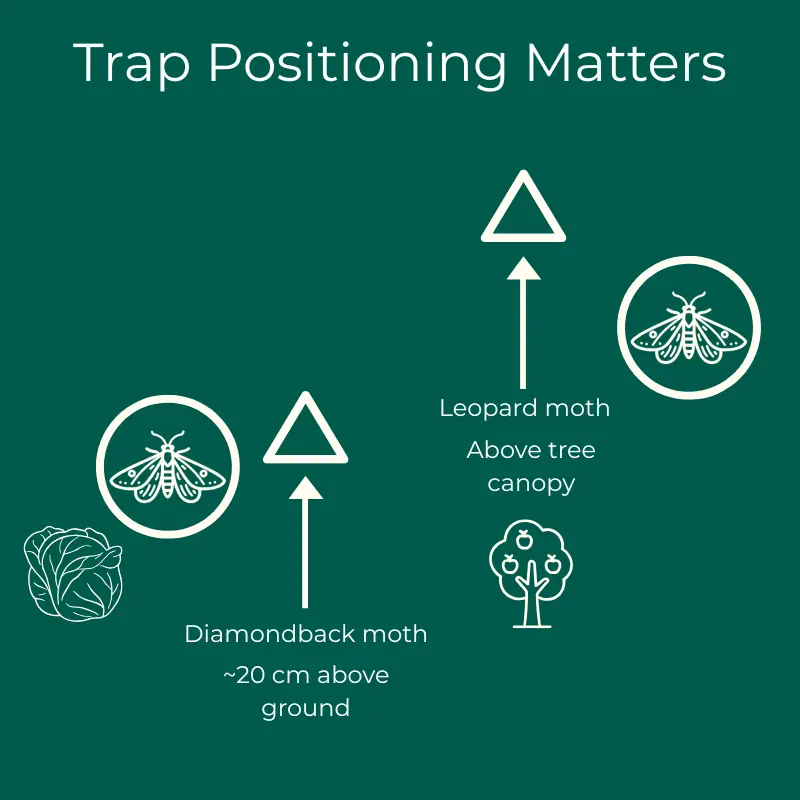
Trap positioning is very important, and the appropriate height varies according to pest behaviour. Placement should therefore always be considered carefully.
For example, the recommended height for the Diamondback moth, Plutella xylostella, is approximately 20 cm above the ground, while a position above the tree canopy is recommended for the Leopard moth, Zeuzera pyrina, a common orchard pest.
In many cases, a useful rule of thumb for moth pests is to place the trap just above the crop canopy. Even so, it is always best to check pest-specific guidance when unsure. Sun exposure should also be considered, as some traps perform better in shaded or semi-shaded positions.
Trap Spacing
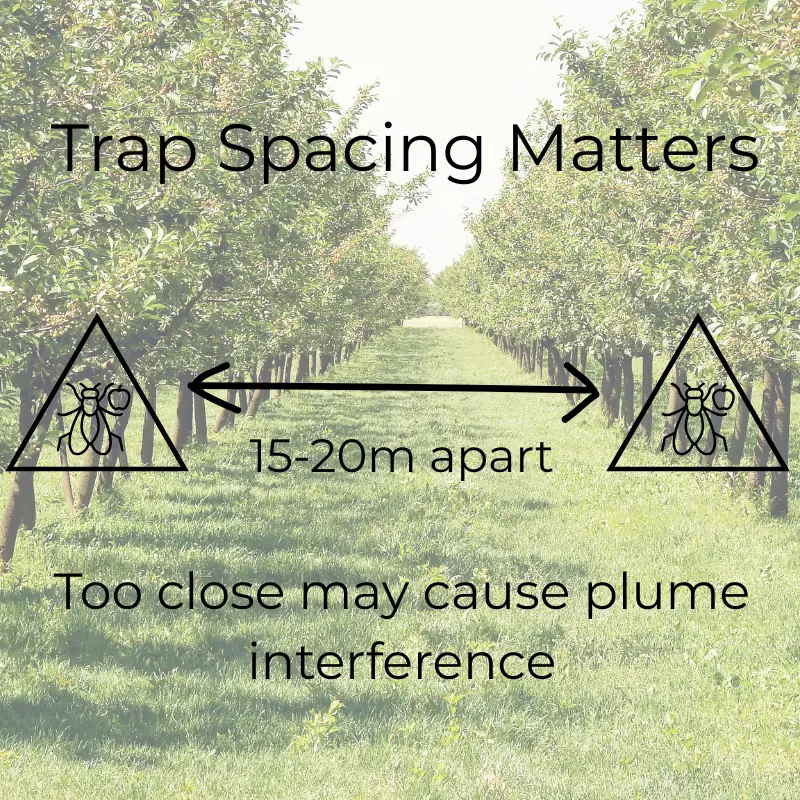
Avoid placing traps too close together. A general guideline is 15 to 20 meters apart to prevent interference between pheromone plumes.
Inspection Frequency
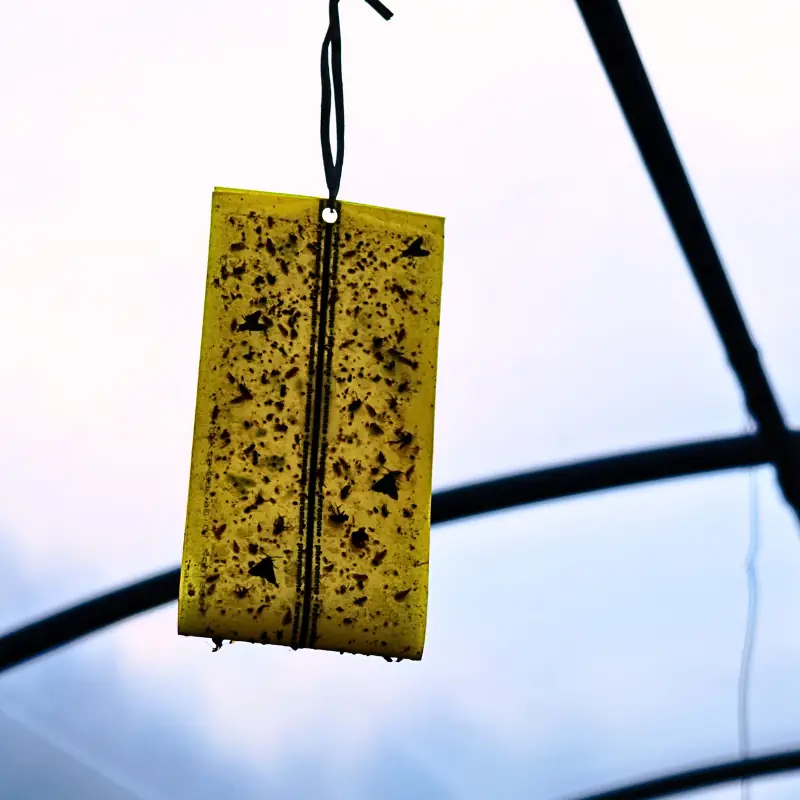
Inspect traps at least once a week. Insect counts should be recorded, and sticky boards or inserts should be replaced when necessary, especially when they become saturated with insects, scales, dirt, or other debris.
Lure Replacement
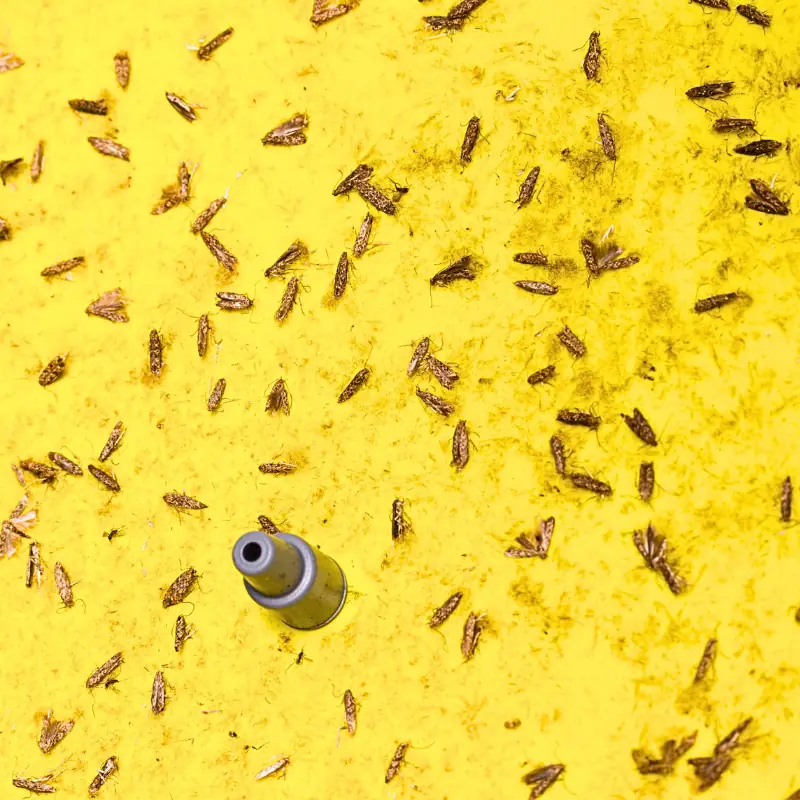
Pheromone lures require periodic replacement to maintain peak performance. Rubber septa should generally be changed on a monthly basis for optimal efficiency.
Limitations of Pheromone Monitoring
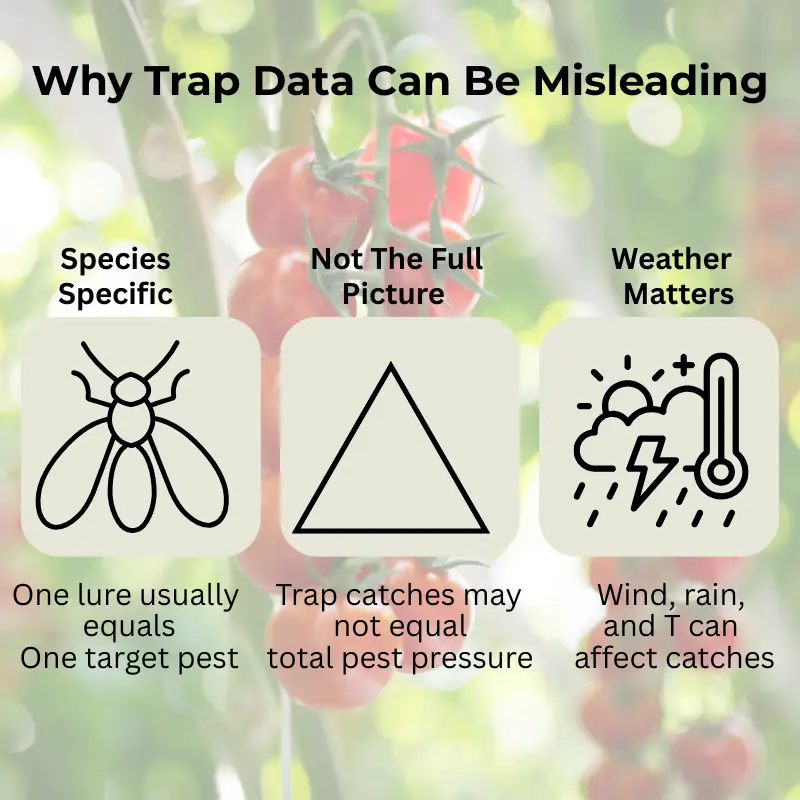
Although pheromone monitoring is a highly effective tool, it should not be treated as a perfect or standalone answer. Like any monitoring method, it has limitations, and understanding those limitations is essential for interpreting trap data correctly within a wider IPM strategy.
Species-Specific Trapping
To avoid negative plume interactions such as masking or antagonism caused by overlapping plumes, each trap usually can only be used with a single-species lure, although there are some exceptions such as certain stored product beetle lures.
This means that multiple traps may be required when monitoring several pest species at the same site.
Inaccurate Picture of Population Size
For some insects, trap catches do not always correlate accurately with total population size. Sex pheromone traps, for example, usually sample only responsive males. Recently mated males, or those in low-activity phases, may not respond.
In addition, transient influxes from strong-flying moth species that migrate readily can give a misleading picture of the true resident population density.
Environmental Factors
Weather can also affect trap performance. Wind, temperature, and rainfall may influence both plume dispersal and insect activity. During prolonged periods of poor weather, trap catches may be suppressed even when actual pest populations remain high.
Understanding these limitations helps ensure that monitoring data is interpreted more carefully and used more effectively.
Conclusion: Pest Monitoring and the Future of IPM
Overall, pest monitoring helps growers improve timing, reduce guesswork, and make more responsible decisions within an integrated pest management programme. When pheromone monitoring is used correctly, it becomes a powerful support tool for earlier detection, more targeted action, and more efficient pest management.
Pheromone monitoring plays a crucial role in the Integrated Pest Management process. By providing valuable information about pest activity and supporting better-informed decisions, it enables growers to respond more effectively while reducing unnecessary pesticide use. As more growers adopt sustainable production practices, the integration of monitoring tools such as pheromone traps will remain an essential component of modern pest management strategies.
International Pheromone Systems (IPS) develops, manufactures, and supplies a full range of pheromone dispensers and trap systems referenced in this article, supporting customers in implementing effective, sustainable, and environmentally sensitive pest management strategies.
About the Author
Dr Sam Jones is the Technical Manager at IPS, having joined the company in 2013. He has over 13 years of experience developing monitoring solutions for insect pests, with considerable knowledge of insect chemical ecology, insect-plant interactions, and taxonomy.
A significant part of his work focuses on guiding early-stage concepts through to fully marketable products.
About International Pheromone Systems
International Pheromone Systems (IPS) focuses on nature-based solutions for pest monitoring and management.
By working with growers, universities, and scientific partners, the company develops pheromone and trapping systems designed to support Integrated Pest Management in agriculture, horticulture, and forestry.
Learn more about International Pheromone Systems on their website.
Frequently Asked Questions About Pheromone Monitoring

What is pheromone monitoring, and what does a pheromone trap actually tell you in an IPM program?
Pheromone monitoring uses species-specific chemical signals to attract a target pest into a trap so you can detect adult activity and track pest trends over time.
In practice, trap catches are usually an early warning signal rather than a direct measure of the damaging stage in the crop. That is why pheromone trap data should be used alongside field scouting, crop stage, and local pest pressure when making IPM decisions.
Are pheromone lures species-specific? Can one trap monitor multiple pests?
Most pheromone lures are species-specific, so one trap usually cannot monitor multiple pests reliably. If you need to monitor more than one pest, it is best to use separate traps and separate lures, clearly labelled and properly spaced. Mixing lures in one trap can cause contamination, poor catches, and confusing results.
When should pheromone traps be deployed, and what is biofix?
Pheromone traps should be placed before the first expected adult flight so you do not miss the beginning of pest activity. Biofix is the biological starting point used in many IPM programs, often based on the first sustained trap catch, to begin degree-day tracking and time later control measures more accurately. In simple terms, it helps link trap catches to the pest’s life cycle so monitoring becomes more useful.
Where should traps be placed, and how many are needed?
Trap placement depends on the pest, crop, and monitoring goal, but traps should generally be placed inside the crop area rather than at the edge. They should also be positioned at the correct height, with trap openings clear of leaves and branches.
The number of traps needed depends on the crop system and whether you are using them for general monitoring or threshold-based decision-making, so local guidance for each pest should always be followed.
How often should pheromone traps be checked, and what should be recorded?
As a general rule, traps should be checked at least once a week and preferably on the same day each week for consistency. During the early part of the season or when pest activity is starting, more frequent checks may be useful.
Record the date, trap location, lure type, and the number of target insects found in each trap, and keep traps clean so the next count remains accurate.
How often should pheromone lures and sticky liners be replaced, and how should lures be stored?
Lure life depends on the product and the target pest, but many lures are replaced about every three to six weeks unless the manufacturer states otherwise. Sticky liners should be replaced whenever they become dirty, dusty, or overloaded with insects.
Lures should be stored cold, handled carefully, and kept free from contamination, especially when working with more than one pheromone type.
How do you interpret trap counts, and when should you act?
Trap counts are best used as decision-support tools rather than absolute measures of pest population size. In many IPM programs, trap catches tell you when to begin scouting more carefully and where to focus attention in the crop.
Action should only be taken according to pest-specific thresholds, local recommendations, crop stage, and what field scouting confirms, because the same trap number can mean different things in different systems.
How do weather and microclimate affect pheromone trap catches?
Weather can strongly affect trap performance and insect activity. Wind can disrupt pheromone plumes, rain can damage traps or reduce stickiness, and cold, heat, or stormy conditions can reduce insect flight even when pests are present. Because of this, unusual trap counts should always be interpreted with local weather conditions in mind.
My trap catches are zero, very low, or suddenly unusual. Does that mean there is no pest pressure?
Not always. Zero or unusual catches can mean low pest activity, but they can also point to a monitoring problem such as the wrong lure, poor lure storage, expired lures, blocked trap entrances, poor placement, dirty liners, or incorrect timing.
Before assuming the pest is absent, check the trap setup carefully and compare results across more than one location if possible.
Do pheromone traps actually control pests, or do they mostly monitor them?
In most cases, pheromone traps are mainly monitoring tools. They help growers detect pest activity, improve timing, and make more informed IPM decisions, but they usually do not solve an infestation on their own.
This is especially true for traps that attract only males. Mass trapping and mating disruption are different strategies, and both require different trap density, system design, and conditions to work effectively.
Can you still monitor pests effectively if you are using mating disruption?
Monitoring becomes more difficult under mating disruption because successful disruption often reduces trap catches to very low levels or even zero. This can make it harder to tell whether the pest is absent or whether the trap is simply less responsive.
In these situations, growers often need to rely more heavily on field scouting, damage checks, or alternative monitoring tools alongside pheromone traps.
Are pheromone traps safe for pollinators, pets, and people, and are they suitable for organic farming?
Pheromone traps are generally considered a targeted and lower-impact IPM tool because they use species-specific attractants rather than broad-spectrum insecticides.
They are commonly used in organic production systems, provided the product and application method meet the relevant standards. Even so, traps should still be placed carefully to reduce non-target captures and kept out of reach of children and pets.
Related Reading on GardenAgroTech
If you would like to explore more practical resources, browse the Agriculture and Gardening sections on GardenAgroTech.