Disclosure: This article contains affiliate links. If you buy through these links, GardenAgroTech may earn a commission at no extra cost to you.
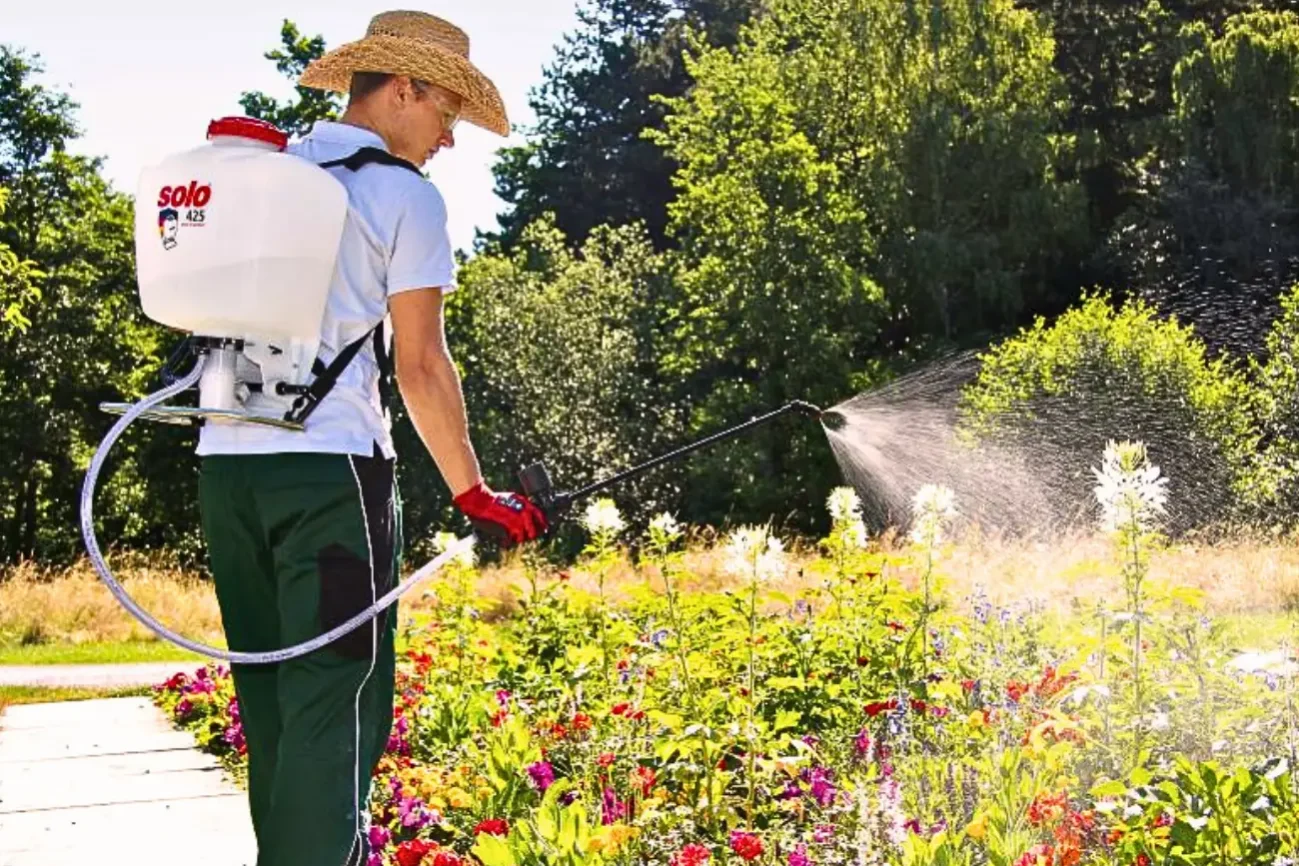
SOLO sprayer buying guide decisions start with one simple question: what job do you need the sprayer to do? A small balcony, raised bed, greenhouse, orchard, farm block, or disinfection task may all need a different type of sprayer.
In this guide, we will look at handheld sprayers, pressure sprayers, backpack sprayers, battery sprayers, mistblowers, foggers, and CLEANLine disinfection tools so you can match the right SOLO product to the real spraying job ahead.
Why the Right Sprayer Matters More Than Tank Size
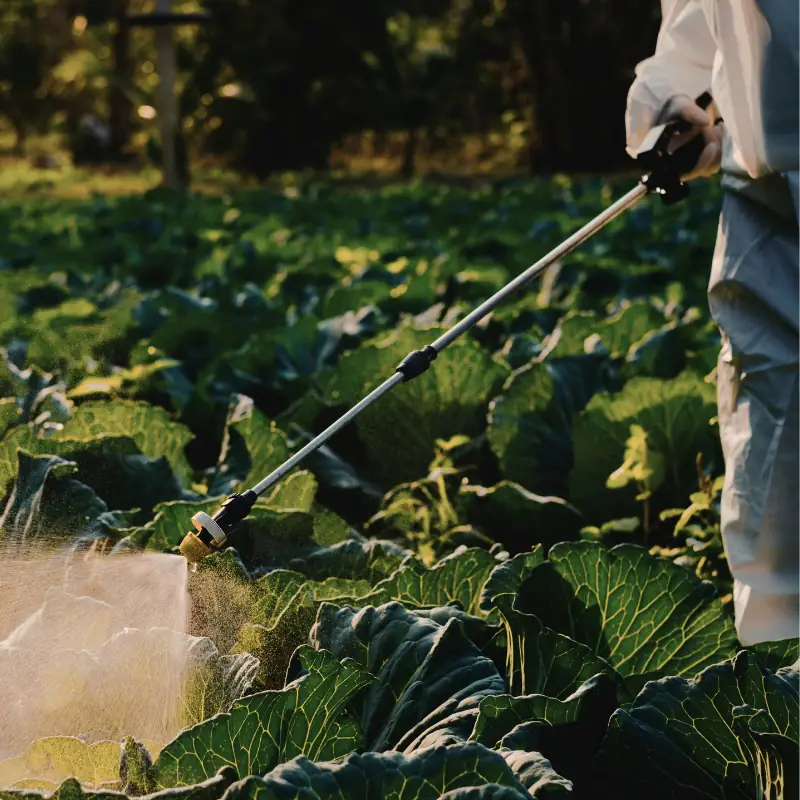
In any SOLO sprayer buying guide, tank size is only one part of the decision. A bigger tank may reduce refilling, but it does not automatically improve spray coverage, pressure consistency, operator comfort, or crop safety.
Whether you are working in a vegetable garden, greenhouse, orchard, or small farm, the better question is this: can the sprayer deliver the right spray pattern to the right part of the plant without wasting product or tiring the operator?
For example, leafy crops may need careful coverage inside the canopy. Shrubs and fruit trees may need extra reach. Herbicide work may need more controlled application.
Meanwhile, disinfection work may need a completely different sprayer designed for cleaning chemicals.
Therefore, the best sprayer is not always the largest one. It is the one that matches the area, crop structure, application type, and frequency of use.
Quick rule: Choose the sprayer by job first, tank size second.
Pressure Consistency Affects Coverage
For longer spraying sessions, pressure consistency becomes more important than many growers realize. If pressure drops while working, the spray pattern can change and coverage may become uneven.
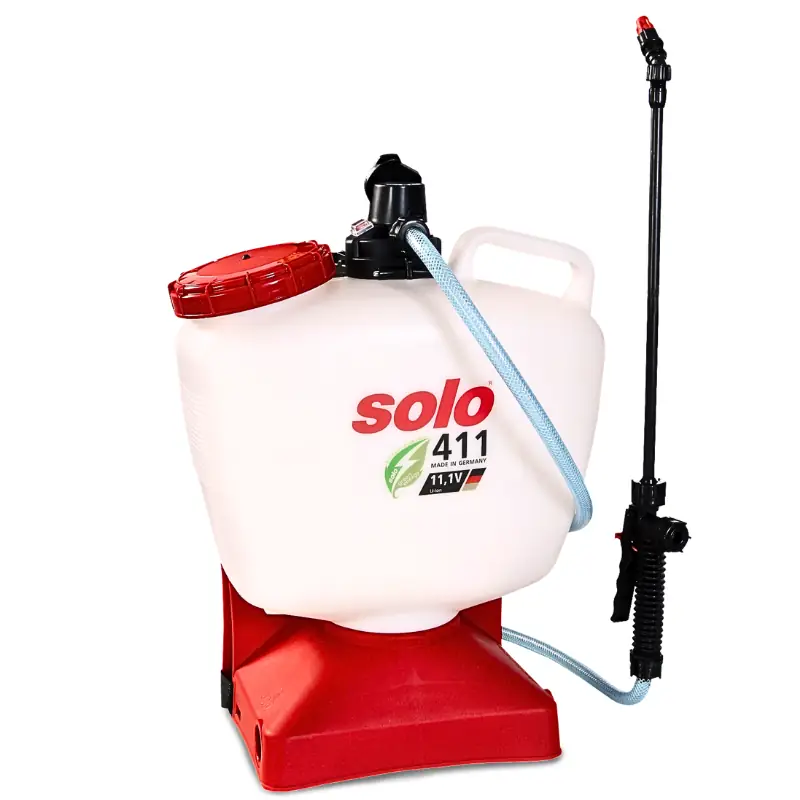
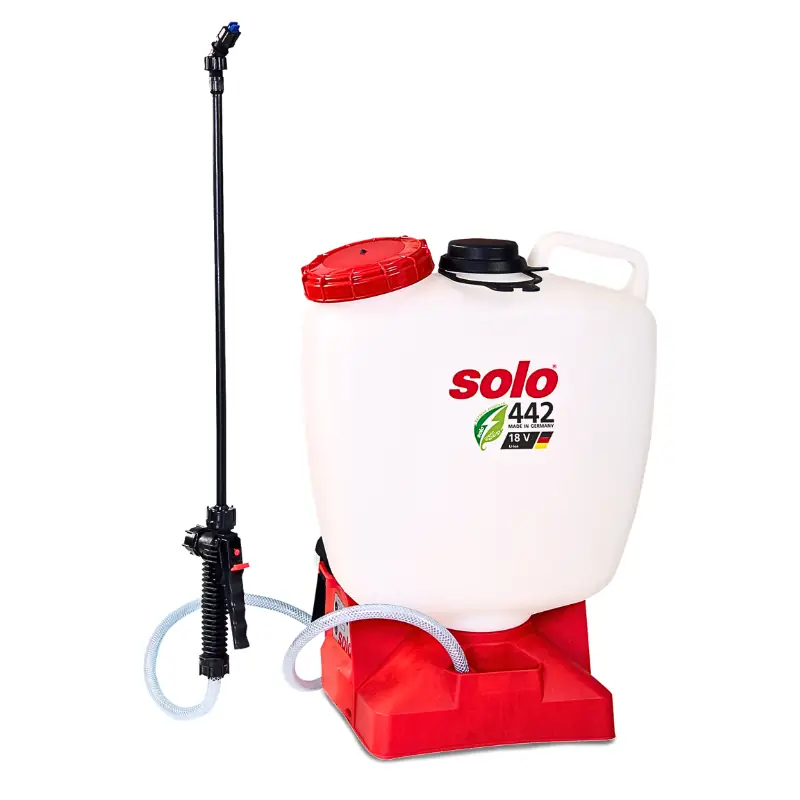
This is where a battery backpack sprayer such as the SOLO 411 becomes useful for larger gardens, greenhouse rows, orchards, and regular plant protection work. Instead of stopping repeatedly to pump, the operator can focus more on coverage, walking speed, nozzle position, and reaching the crop evenly.
The Nozzle Decides Where the Product Lands
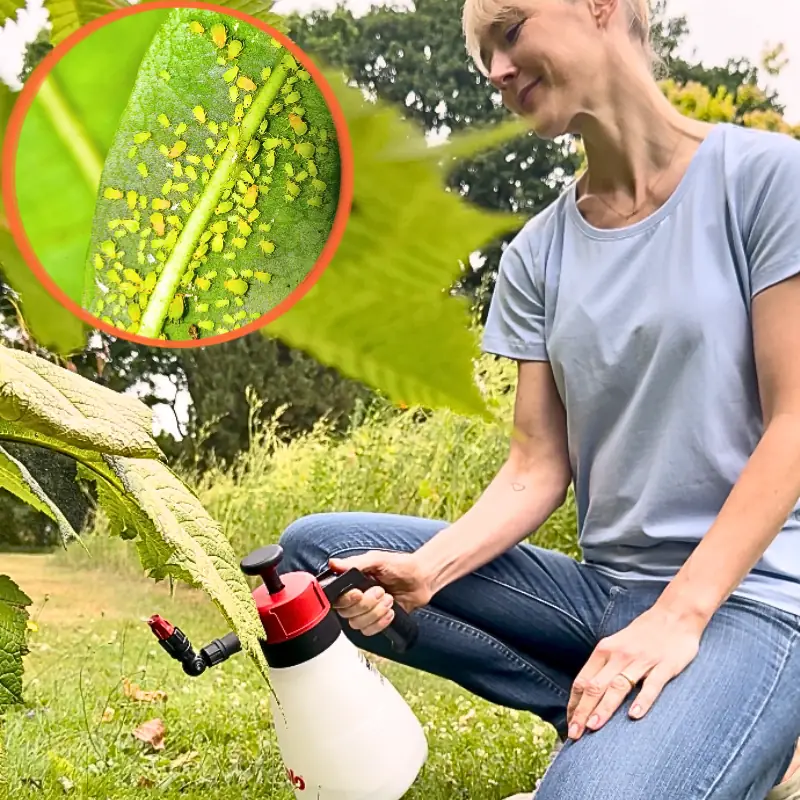
A good sprayer is only as useful as the spray pattern it produces. This becomes especially important with soft-bodied pests such as aphids, whiteflies, and mites, because many of them shelter on leaf undersides or inside dense foliage. If the nozzle only sprays from above, part of the pest population may remain untouched.
This is why a pivoting or adjustable nozzle is valuable for small gardens, houseplants, herbs, ornamentals, and Vegetable gardening. It helps the operator direct spray more accurately toward the underside of leaves instead of only wetting the upper canopy.
Extension guidance on aphids makes the same practical point: contact products such as insecticidal soaps and horticultural oils need thorough coverage, including the underside of leaves, because they only work well when they reach the pest directly
Quick SOLO Sprayer Selection Guide
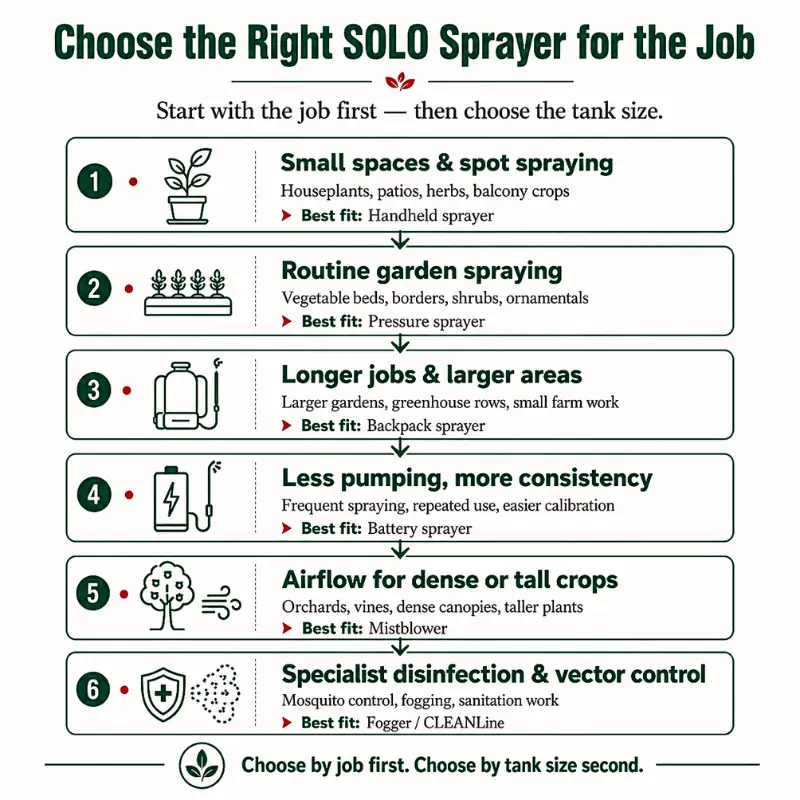
The easiest way to choose a sprayer is to start with the job, not the tank. A balcony plant, a cabbage bed, a greenhouse row, a fruit tree, a farm boundary, and a disinfection task all place different demands on the equipment.
For small jobs, a handheld sprayer keeps the work simple and controlled. As the garden gets larger, pressure sprayers become more practical because they offer more capacity and reach. Once spraying sessions become longer or more frequent, backpack and battery sprayers help reduce fatigue while improving comfort and consistency.
Finally, dense canopies, mosquito work, and disinfection need more specialist tools such as mistblowers, foggers, or CLEANLine sprayers.
Small Gardens, Balconies and Spot Spraying
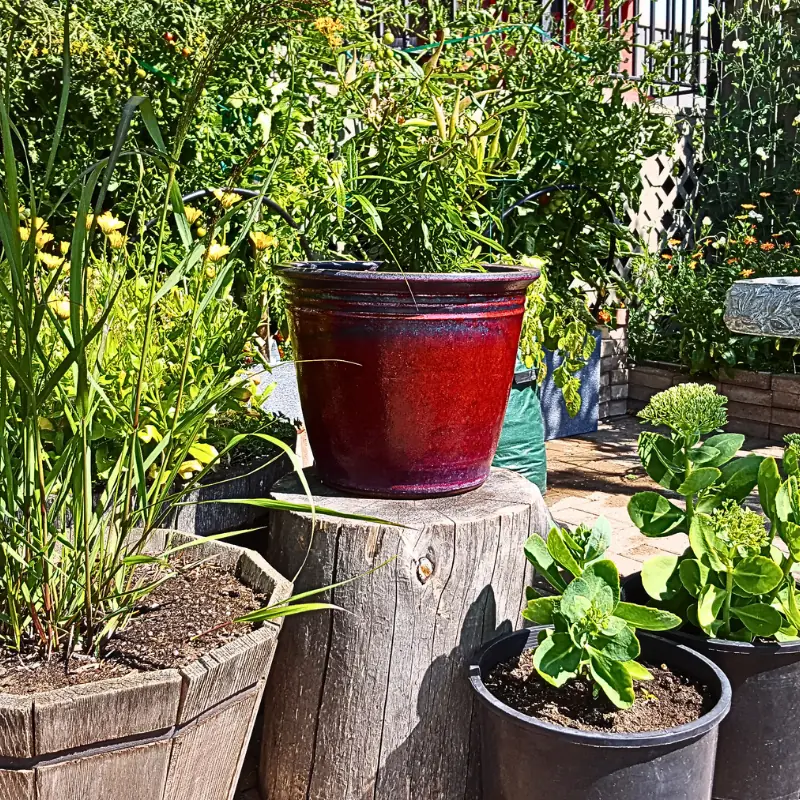
When a Handheld Sprayer Is Enough
For houseplants, patios, herbs, balcony crops, flowers, and small vegetable gardening spaces, a handheld sprayer is often the most practical starting point. It is light, easy to store, quick to fill, and simple to control around individual plants.
The main advantage is precision. For many gardeners, the goal is not to spray more area, but to treat the right area carefully. In organic farming and home garden care, that can mean targeting a few affected leaves, applying a foliar feed, or handling a small pest hotspot without overcomplicating the job.
If you do not need a pressure sprayer or backpack sprayer yet, a manual sprayer keeps plant care simple. It gives enough control for small jobs while keeping the tool light, easy to handle, and quick to clean after use.
Pressure Sprayers for Gardens, Shrubs and Regular Plant Care
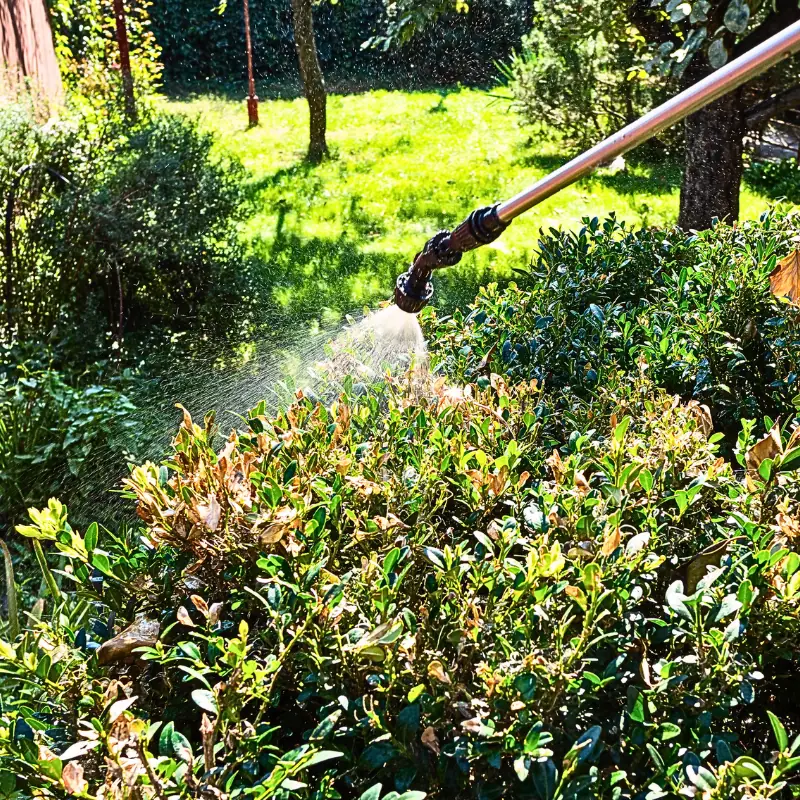
When a Handheld Sprayer Becomes Too Small
A handheld sprayer is useful at the beginning, but it can quickly become frustrating as the garden expands. One extra refill may not feel like much. However, several extra refills across vegetable beds, shrubs, borders, and ornamentals can turn a simple task into a slow one.
That is where 5–7 litre pressure sprayers become more practical. They give gardeners more capacity, better reach, and a steadier workflow without immediately moving into backpack or battery equipment.
They also open the door to useful accessories such as longer lances, different nozzles, and drift-control options. As a result, a pressure sprayer becomes a sensible middle step for gardeners who need more capacity and reach, but still want a straightforward tool for regular plant care.
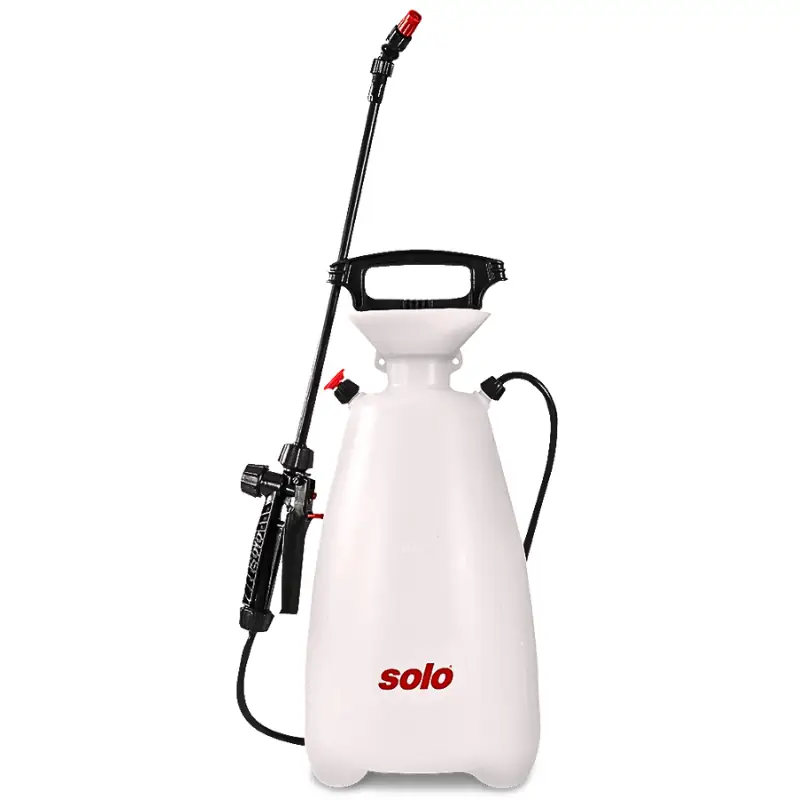
Backpack Sprayers for Larger Gardens, Greenhouses and Small Farms
Better Carrying Comfort for Longer Jobs
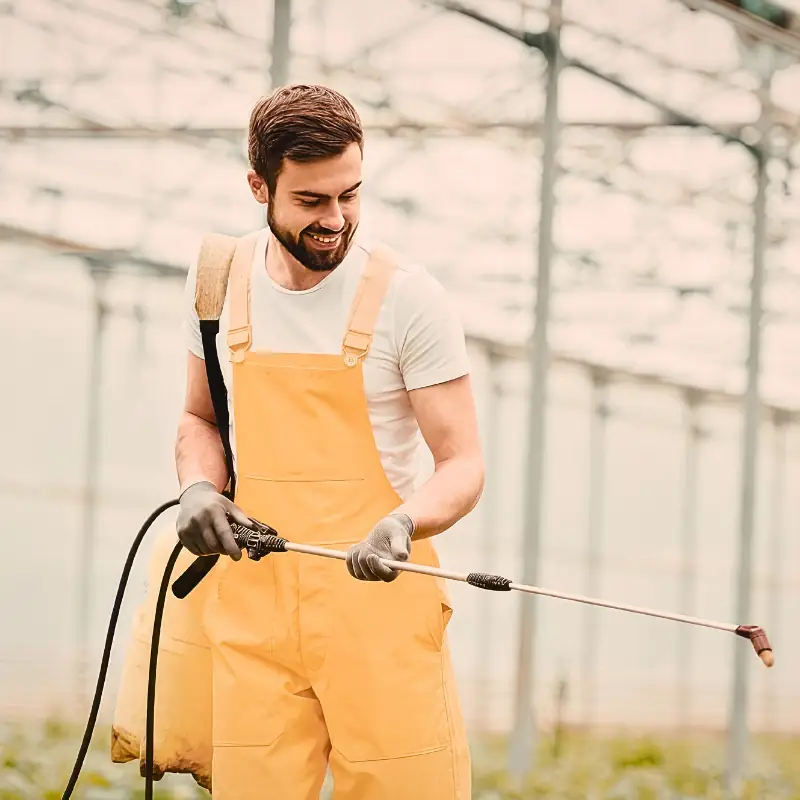
When spraying becomes a longer job, carrying comfort matters. A backpack sprayer spreads the weight more naturally across the body and allows the operator to work through larger areas with fewer interruptions.
This matters in larger gardens, greenhouse rows, nurseries, small farms, and landscape maintenance. Instead of treating spraying as a quick task, the operator can work more methodically: steady walking speed, consistent nozzle position, and better attention to the crop canopy.
Manual Backpack or Battery Backpack?
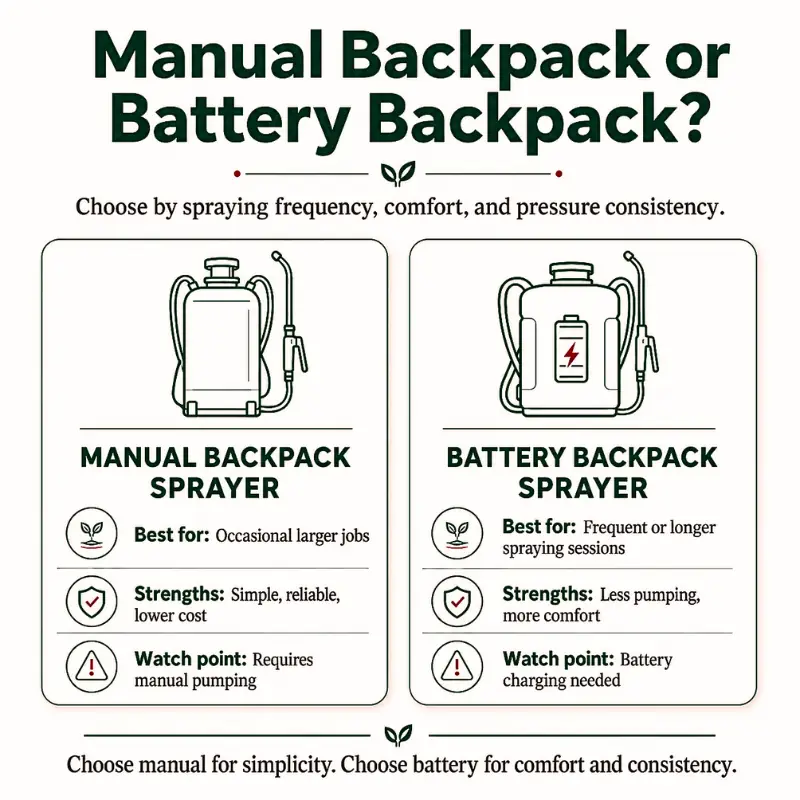
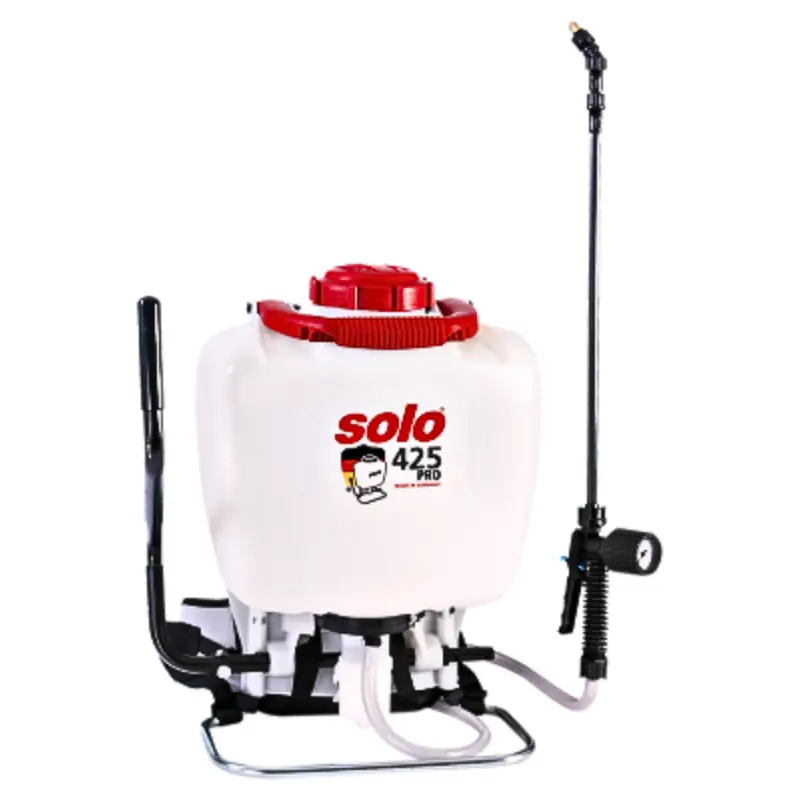
A manual backpack sprayer is a good choice for users who want simplicity, lower cost, and fewer electronic parts. It fits occasional larger jobs and works well for gardeners, landscapers, and small growers who are comfortable pumping while they spray.
On the other hand, battery backpack sprayer becomes more attractive when spraying is frequent, tiring, or more precision-focused. Battery power reduces manual pumping and helps the operator maintain a steadier work rhythm over longer sessions.
As a result, more attention can go toward walking speed, nozzle position, spray coverage, and crop condition.
In simple terms, choose a manual backpack sprayer when you want a strong, straightforward tool. Choose a battery backpack sprayer when comfort, pressure consistency, and repeated use matter more.
Battery Sprayers: Less Pumping, More Consistent Work
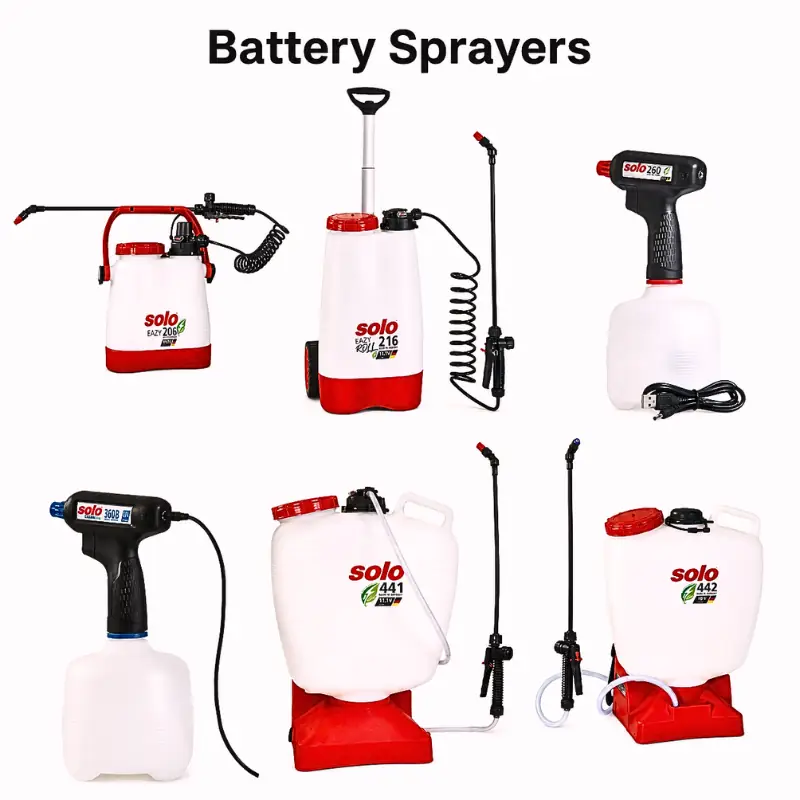
Battery sprayers are not only a convenience upgrade. They are useful when spraying becomes regular, when the area is larger, or when the operator wants less fatigue during repeated plant-protection work.
Why Battery Power Improves Work Rhythm
For greenhouse growers, landscapers, orchard owners, and serious gardeners, the main benefit is work rhythm. Less pumping means more attention can go toward coverage, crop condition, walking speed, and nozzle placement. That makes battery sprayers a practical step toward more controlled, efficient plant care.
Mistblowers: When You Need Airflow, Not Just Spray Pressure
Dense Canopies, Orchards, Vines and Tall Crops
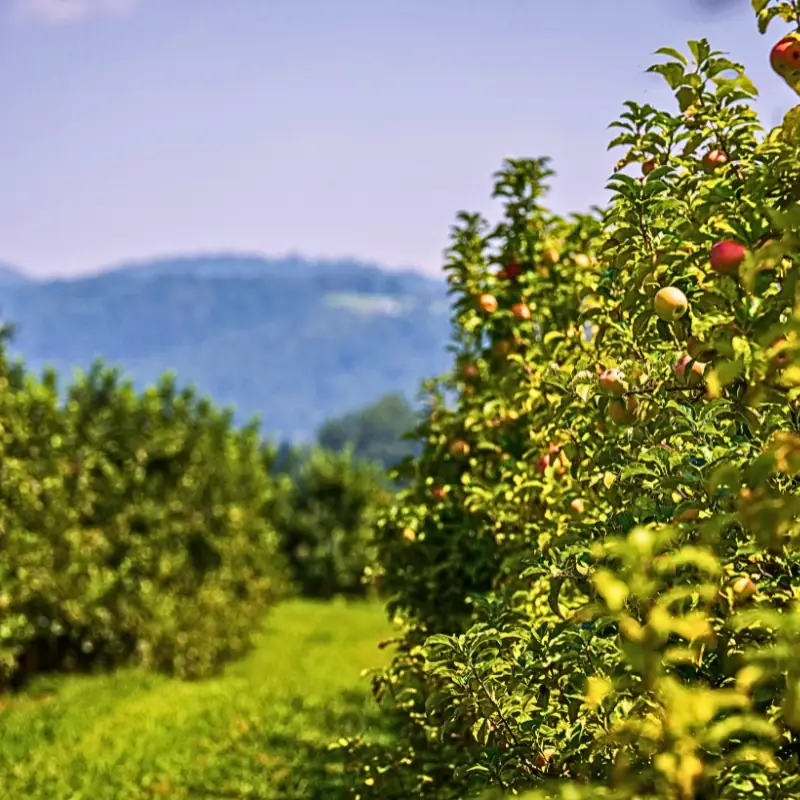
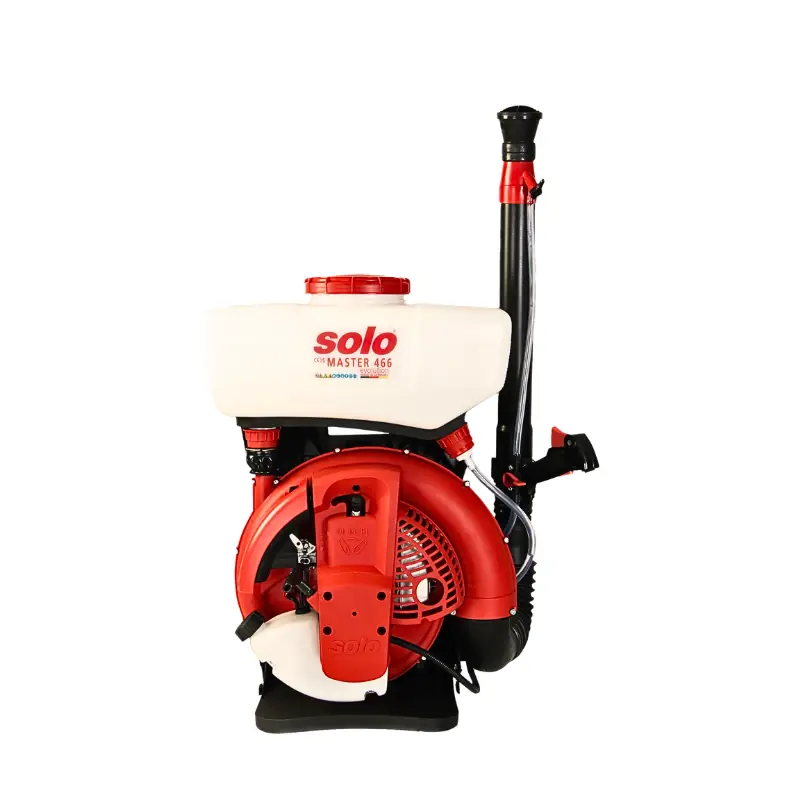
Some crops are not flat surfaces. Orchards, vines, dense shrubs, tobacco, and taller crops create a three-dimensional canopy where ordinary spray pressure may not reach the inner leaves or hidden parts of the plant.
This is where mistblowers become useful. Instead of relying only on liquid pressure, a mistblower uses strong airflow to carry fine droplets deeper into the crop structure. That airflow helps move the mist around foliage, into the canopy, and toward areas that are difficult to reach with a standard spray lance.
For gardeners and growers, the practical message is simple: use a sprayer when you need controlled surface application, but consider a mistblower when the crop canopy itself becomes the challenge.
In orchards, vines, dense plantings, and taller crops, airflow can make the difference between spraying the outside of the crop and actually reaching the target area.
Fogging and Specialist Disinfection Applications
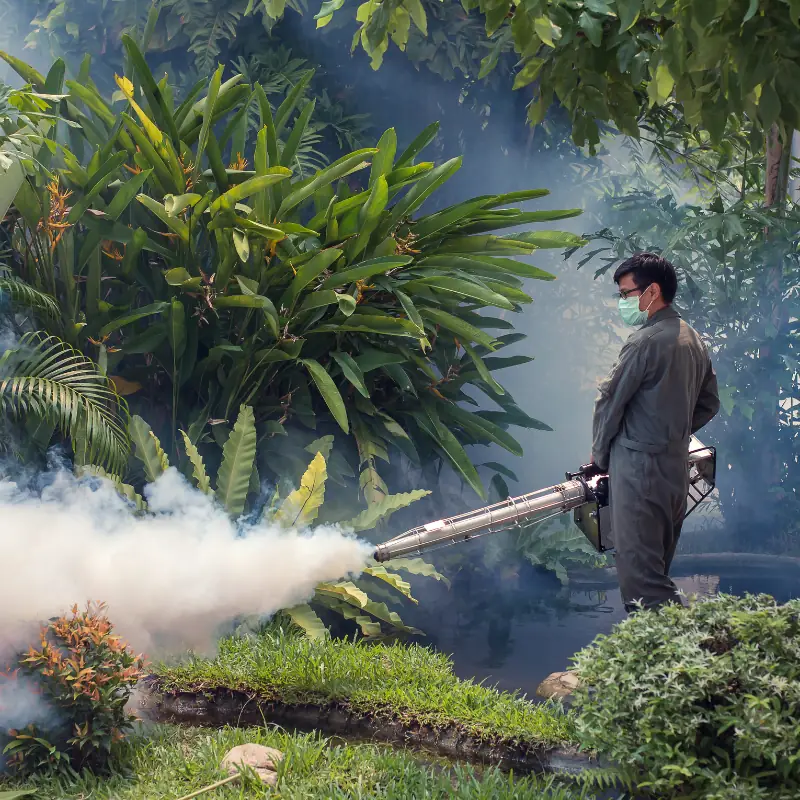
Fogging belongs in its own specialist category. It is not ordinary garden spraying, and it should not be treated as a general substitute for normal plant protection, cleaning, or sanitation work.
Cold fogging is used where very fine droplets are needed for specific applications such as mosquito control, vector control, professional pest control, and surface or room disinfection. In other words, this is no longer just about wetting plant leaves. It is about placing very fine droplets into a target area where coverage, safety, ventilation, and product choice all matter.
Cold Fogging for Disinfection and Mosquito Control
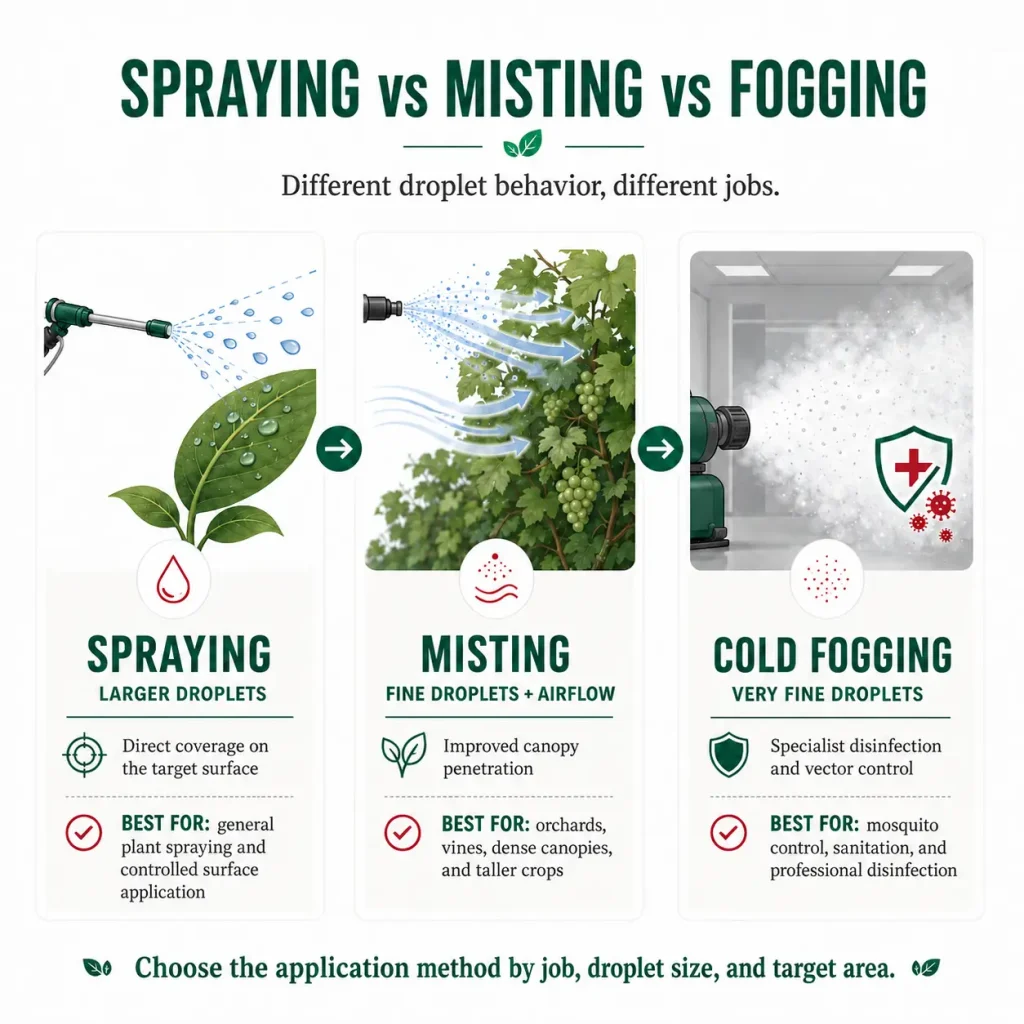
Cold fogging is useful when the job requires very fine droplets and a different type of application pattern. For example, mosquito or vector-control work may involve outdoor spaces, shaded vegetation, or areas where pests rest.
In disinfection work, the target may be surfaces, rooms, or enclosed spaces where the application method must match the product label and safety requirements.
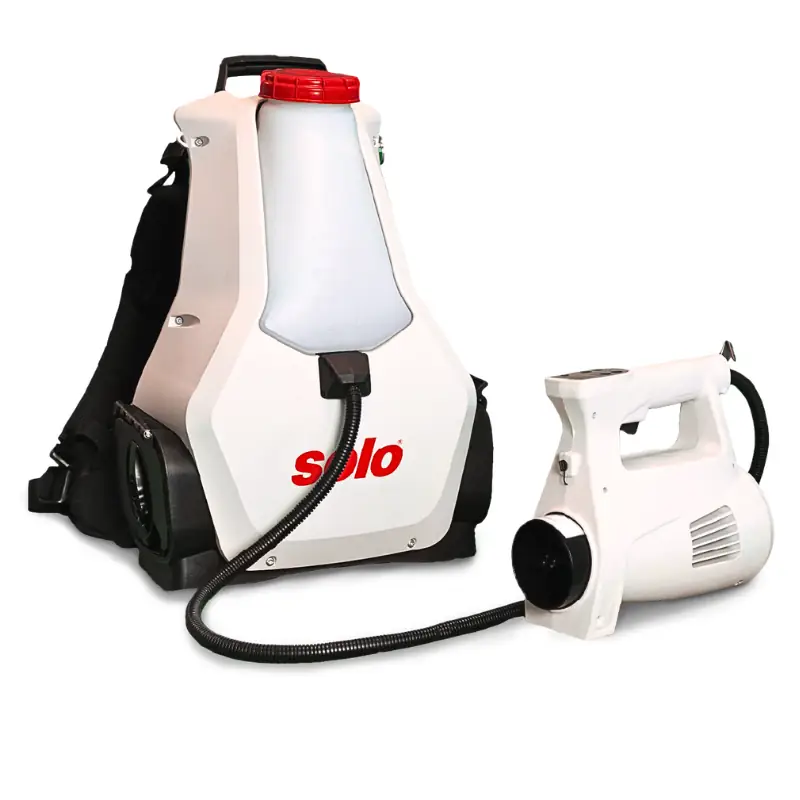
For this kind of specialist work, the SOLO eFOG 480 is a natural fit. It is a battery-powered backpack cold fogger designed for controlled fog application rather than ordinary garden spraying.
Its 6 L tank, 18 V lithium-ion battery, high-pressure pump, adjustable fan speed, and laser aiming support make it suitable for professional users working in vector control, pest control, disinfection, and other targeted fogging situations.
Safety Comes First With Fogging
Fogging should always be treated as a specialist application, especially when it is used for mosquito control, vector control, pest control, or disinfection.
Check the Label Before You Fog
Before using any fogging equipment, check the product label, approved application method, PPE requirements, ventilation needs, re-entry interval, weather conditions, and local regulations.
This matters because very fine droplets can move differently from ordinary spray droplets. WHO guidance on space spraying explains that these applications are mainly used for rapid knock-down of flying insect pests and disease vectors, but should be considered as part of an integrated vector-management programme rather than as a stand-alone solution.
Therefore, fogging can be powerful – but it should never be treated as casual garden spraying. When the job only requires controlled plant application, a handheld, pressure, backpack, or battery sprayer will often be the better tool. When the job truly requires specialist fogging, safety planning comes first.
CLEANLine Sprayers for Cleaning, Foam and Disinfection

Cleaning and disinfection jobs should not be treated the same as ordinary plant spraying. Different chemicals can affect seals, nozzles, pumps, and containers in different ways.
This matters in greenhouses, packhouses, food-handling areas, vehicles, tools, benches, and hygiene-sensitive workspaces.
That is why chemical compatibility matters. A foam sprayer used with acidic cleaning agents may need different seal material than one used with alkaline cleaners or disinfectants. The goal is not only to apply foam, but to use a sprayer that matches the chemistry inside the tank.
Why Cleaning Chemicals Need the Right Sprayer
FKM and EPDM are seal materials used inside sprayers. They matter because cleaning chemicals can react differently with seals, gaskets, valves, and other internal parts.
Choosing the right seal material helps protect the sprayer, improve safety, and support more reliable foam application.
pH Range, Seals and Chemical Compatibility
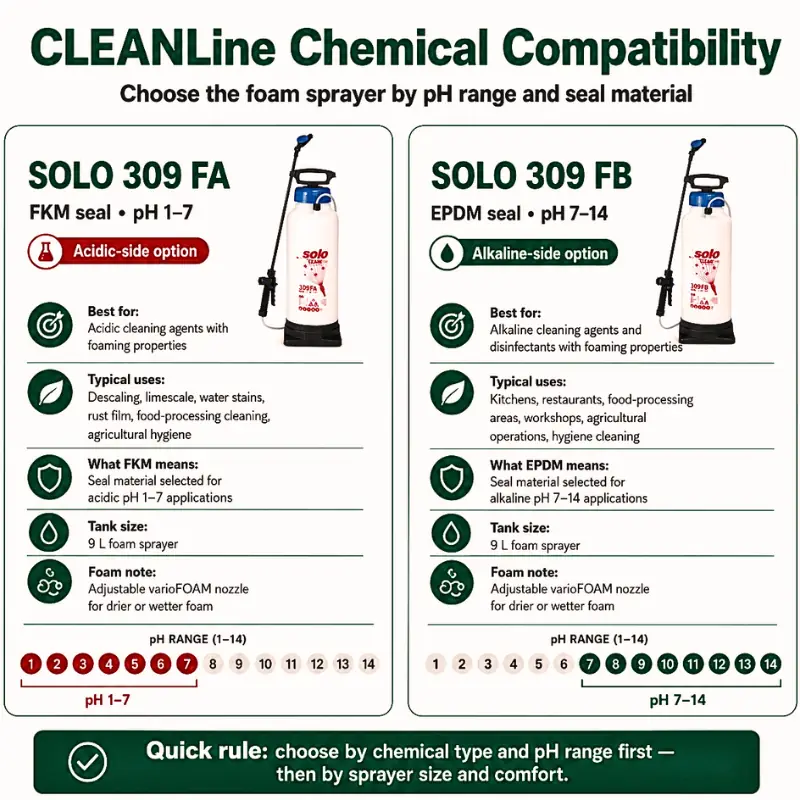
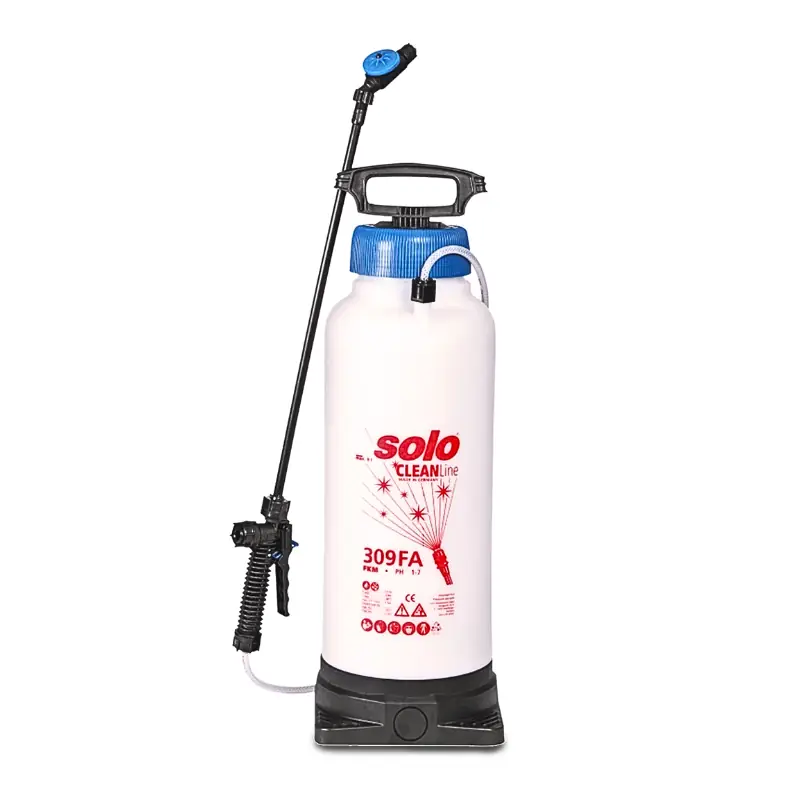
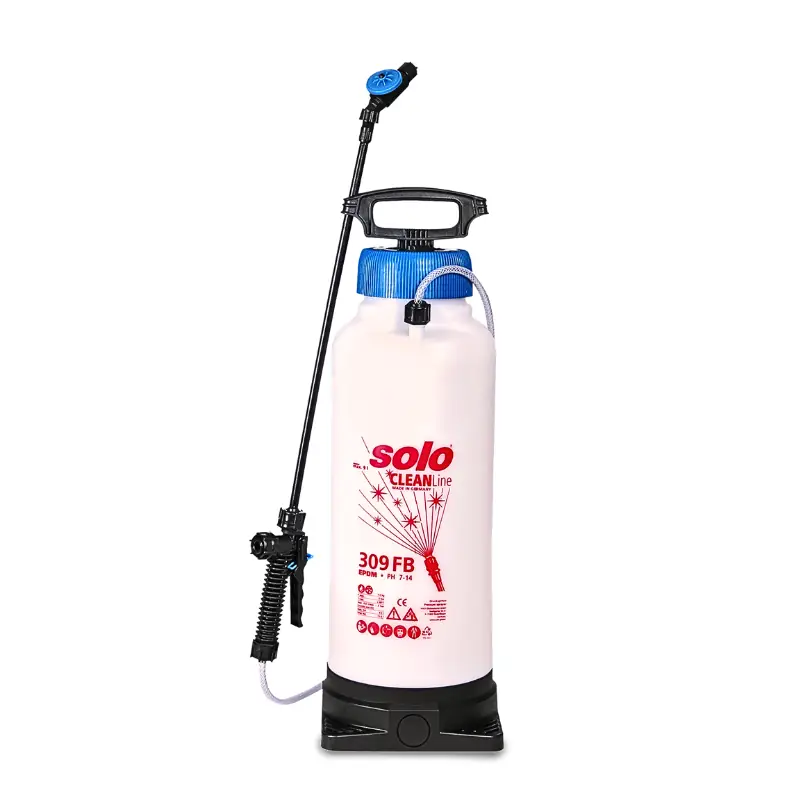
In the CLEANLine foam-sprayer range, the SOLO 309 FA is positioned for pH 1–7 applications with FKM seals, making it suitable for acidic cleaning agents with foaming properties.
The SOLO 309 FB is positioned for pH 7–14 applications with EPDM seals, making it suitable for alkaline cleaning agents and disinfectants with foaming properties.
For growers, packhouse operators, food-processing teams, and hygiene contractors, the message is simple: choose the sprayer by chemical type and pH range first, then by tank size and comfort.
Granule Spreaders: When the Product Is Not a Liquid
Fertilizer, Lawn Care and Dry Granules
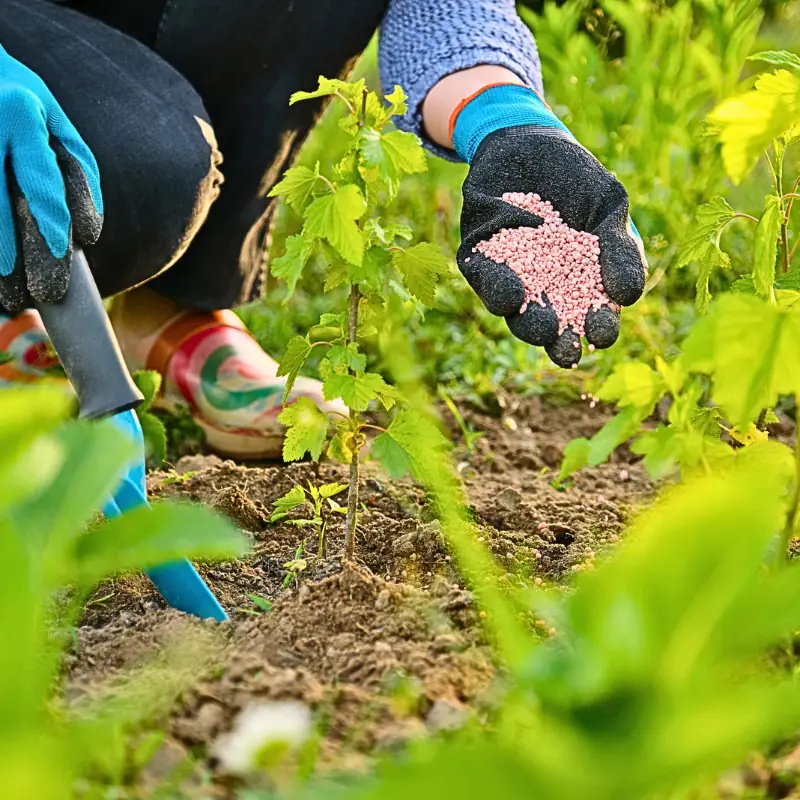
Not every application is liquid. Fertilizer, lawn products, pelletised lime, gritting salt, seed, animal feed, and other granules need a spreader rather than a sprayer.
Hand spreading can work for very small areas, but it is rarely consistent. Some parts of the soil may receive too much product, while other areas receive too little. Over time, that can affect plant growth, fertilizer efficiency, and Plant/Soil health.
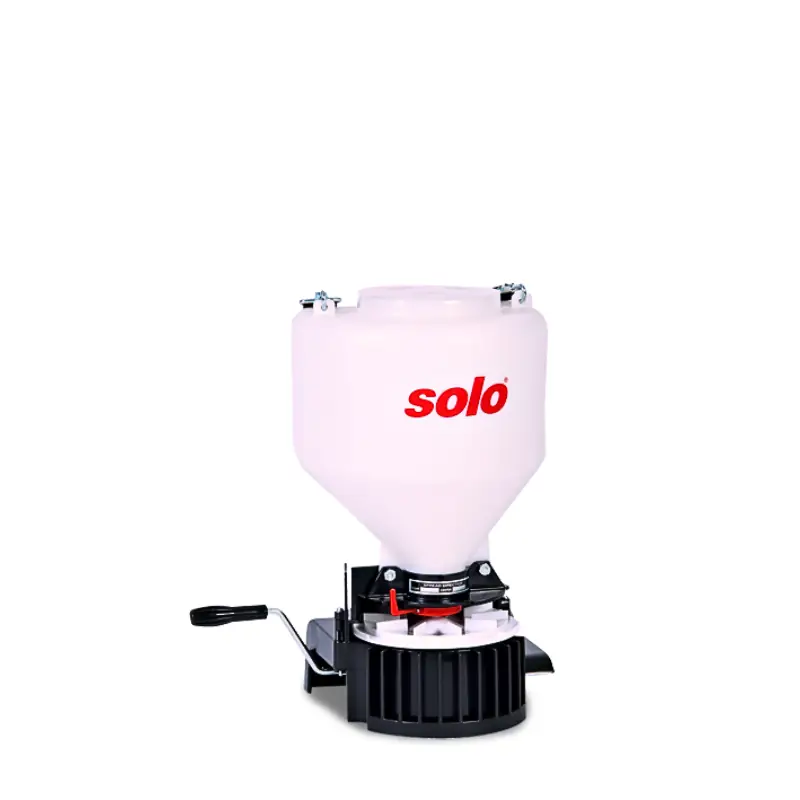
This is where the SOLO 421 granule spreader fits naturally into the guide. It offers a 9 L container for dry materials and is designed to spread granules more evenly than hand application.
That makes it useful for lawns, gardens, small farm areas, steep ground, and places that are difficult to access with larger equipment. For gardeners, landscapers, and small farms, it is a practical tool when the job requires dry material distribution instead of liquid spraying.
For gardeners, landscapers, and small farms, it is a practical tool when the job requires dry material distribution instead of liquid spraying.
How to Choose the Right SOLO Sprayer in 5 Questions
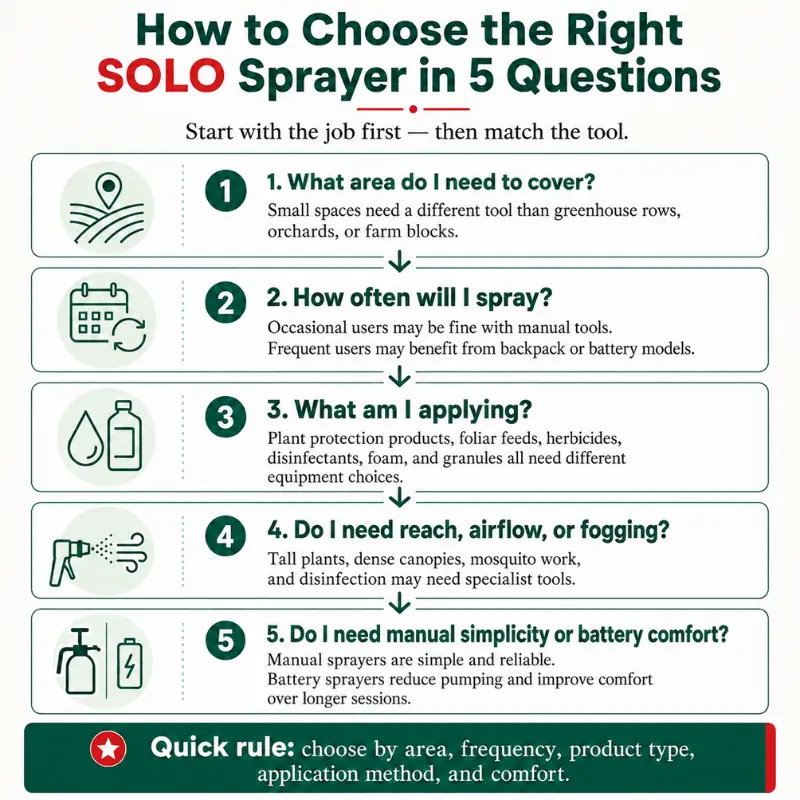
Before buying, ask five practical questions:
What area do I need to cover?
Small spaces need a different tool than greenhouse rows, orchards, or farm blocks.
How often will I spray?
Occasional users may be fine with manual tools. Frequent users may benefit from backpack or battery models.
What am I applying?
Plant protection products, foliar feeds, herbicides, disinfectants, foam, and granules all need different equipment choices.
Do I need reach, airflow, or fogging?
Tall plants, dense canopies, mosquito work, and disinfection may need specialist tools.
Do I need manual simplicity or battery comfort?
Manual sprayers are simple and reliable. Battery sprayers reduce pumping and improve comfort over longer sessions.
Turn the Answers Into a Buying Decision
Once you answer these five questions, the choice becomes much clearer. Small spaces usually need precision. Larger areas need capacity and comfort.
Dense crops may need airflow. Cleaning and disinfection tasks need chemical compatibility.
Therefore, the right sprayer is not chosen by tank size alone, but by the job it must perform.
Final Takeaway: Match the Sprayer to the Job
The best sprayer is not always the biggest, most expensive, or most powerful one. It is the one that fits the work in front of you. A few pots on a patio, a row of vegetables, a greenhouse bench, an orchard canopy, a hygiene-sensitive workspace, and a mosquito-control task are not the same job — and they should not all be approached with the same tool.
Better Spraying Starts With a Better Match
Therefore, start with the application. Look at the area you need to cover, the type of product you are applying, the crop or surface you are targeting, and how often the work will be repeated. After that, consider comfort, reach, pressure consistency, airflow, chemical compatibility, and safety.
This is where a good buying decision becomes more than a simple purchase. The right sprayer can save time, reduce waste, improve coverage, and make plant care or sanitation work more predictable. More importantly, it gives you better control — and control is what separates casual spraying from professional application.
So, before choosing by tank size, choose by purpose. Match the sprayer to the job first. The right model will make much more sense after that.
Which sprayer is right for which job?
The right sprayer depends on the job, the area, and how often you spray. Small handheld sprayers are best for quick spot jobs around the house or a few plants. Compression sprayers suit medium garden use.
Backpack sprayers are better for larger areas and more regular spraying. Battery models help most when you are covering bigger spaces or spraying often. Mistblowers make more sense for taller or denser crops where reach and canopy penetration matter. Granule spreaders are better for dry products rather than liquids.
What size sprayer do I need?
Choose sprayer size based on how much area you cover per session and how often you want to stop to refill. A small tank is easier to carry and control, but it becomes frustrating if you need many refills.
A larger tank cuts refill time, but full weight can become tiring quickly. Bigger is not always better. The best size is the one that matches your area, your strength, and your spraying frequency.
When is a handheld or compression sprayer enough, and when should I move to a backpack sprayer?
A handheld or small compression sprayer is enough when you are treating a small vegetable patch, a few fruit trees, or occasional pest hotspots. Move to a backpack sprayer when your sessions become longer, your area gets larger, or you want steadier pressure without stopping so often. Once spraying starts feeling slow, tiring, or inconsistent, a backpack is usually the better step up.
Is a battery sprayer really worth the extra money?
A battery sprayer is usually worth it if you spray often, cover larger areas, or get tired from constant pumping. It also helps keep pressure more consistent, which improves coverage and makes calibration easier. If you only spray occasionally on small areas, a manual sprayer may still be the better value because it costs less and has fewer parts to worry about.
Manual or battery backpack sprayer for home use?
A manual backpack sprayer is a good choice for smaller budgets, occasional use, and people who want a simpler tool. A battery backpack sprayer makes more sense when you want easier operation, more even pressure, and less physical effort over longer sessions. For regular lawn, orchard, greenhouse, or perimeter work, battery often feels like the more comfortable option.
What is the best sprayer for a vegetable garden?
For most vegetable gardens, the best sprayer is one that matches your bed size and lets you target plants accurately. A smaller handheld or compression sprayer is fine for light spot spraying or a few rows. If you spray regularly or have a larger garden, a small backpack or larger compression sprayer is usually more practical. For vegetables, nozzle control and the ability to reach the undersides of leaves are often just as important as tank size.
What is the best sprayer for fruit trees or a backyard orchard?
For fruit trees, the main issue is usually reach and canopy coverage rather than tank size alone. A good orchard sprayer should help you spray upward effectively and cover more than just the outer leaves.
If you have a few smaller trees, a quality sprayer with an extension lance may be enough. However, for taller trees or denser canopies, you may need a more powerful backpack setup or even a mistblower.
How do I choose between a backpack sprayer and a mistblower?
Choose a backpack sprayer when you want controlled application for general garden, lawn, or orchard work. On the other hand, choose a mistblower when you need better penetration into dense canopies or more reach into taller trees. Mistblowers are more specialized and can be very useful in orchard-type situations, but they are not always necessary for normal garden spraying and they can increase drift if used carelessly.
What is the best way to spray the underside of leaves?
The best way to spray leaf undersides is to use the right angle, the right nozzle, and a sprayer that lets you direct the spray upward easily. An angled, swivel, or upward-spray nozzle can make a big difference. Good technique matters too. You need to move the wand so the spray actually reaches the lower leaf surface instead of only hitting the top of the canopy.
Which nozzle should I use for weeds, fungicides, or foliar feeding?
The best nozzle depends on the job. Some nozzles are better for broad, even coverage, while others are better for more targeted or canopy-focused spraying. A wide fan pattern can help with even surface coverage, while other patterns may be better for foliage or more precise application. In practice, the nozzle often affects spraying quality as much as the sprayer itself, so it is worth paying attention to nozzle choice rather than buying by tank only.
Do I need separate sprayers for herbicides, insecticides, or foliar feeds?
In many cases, yes. Keeping separate sprayers for different uses is a smart idea because it reduces the risk of contamination and accidental crop damage. Many users prefer one sprayer for herbicides and another for insecticides, fungicides, or feed products. It is a practical habit that improves safety and gives growers more confidence in what they are applying.
When is a spreader better than a sprayer?
A spreader is better when you are applying dry granular products such as some fertilizers or pre-emergent materials over a larger area. A sprayer is better when you need liquid application, foliage coverage, spot treatment, or more precise targeting. If the product needs to coat leaves or be directed to a specific problem area, a sprayer is usually the better choice. If you want broad, even coverage with granules, a spreader often makes more sense.