What Is This Greenhouse Pepper Cost Calculator?
If you’ve ever priced greenhouse peppers using a “standard” farm spreadsheet, you’ve probably felt the frustration. The numbers look fine on paper, and then your energy bill or labor during peak picking weeks quietly destroys the margin.
That’s exactly why I built this free greenhouse pepper cost calculator.
Here you can model the real economics of protected peppers, including heating, cooling, ventilation/dehumidification, fertigation, and the multi-harvest reality where you pick repeatedly—and pay labor costs every time.
For peppers grown under open field conditions check out this calculator.
A Greenhouse Pepper Cost Calculator Built for Real Climate and Harvest Costs
Therefore, this calculator is designed around how peppers actually behave under cover. It caters for long harvest windows, shifting grade/color pack-out, and cost drivers that change by season (winter vs shoulder vs hot spells).
For a grower-facing production reference, the BC Greenhouse Growers’ Association Pepper Production Guide is a solid companion read alongside this calculator.
Why Greenhouse Pepper Profit Is Hard to See Until It’s Too Late?
First, greenhouse peppers are a Climate-Smart Cultivation win. They have higher yield potential, better control, and often stronger quality.
However, the trade-off is that your “invisible” costs become the dominant ones.
Heating and ventilation aren’t optional. They’re the difference between fruit set and flower drop, between marketable fruit and soft, thin-walled disappointments.
Therefore, if your costing tool doesn’t treat climate control as a first-class cost category, your break-even price is almost guaranteed to be wrong.
Why most greenhouse pepper cost calculations underestimate break-even
Second, peppers are a true multi-harvest crop, which means labor compounds. Even if your transplant and setup costs are steady, the season is won or lost in the repeated cycles of harvest, grading, packing, and delivery.
Meanwhile, quality is not constant: your grade mix shifts, color percentages change, and rejections spike when temperatures swing or pest pressure rises.
If you want a practical, greenhouse-specific reference on pollination constraints (a common hidden cause of poor fruit set under cover), Michigan State University Extension explains how bumblebee colonies are used in greenhouse vegetable production, including cost considerations.
Built for Multi-Harvest Reality
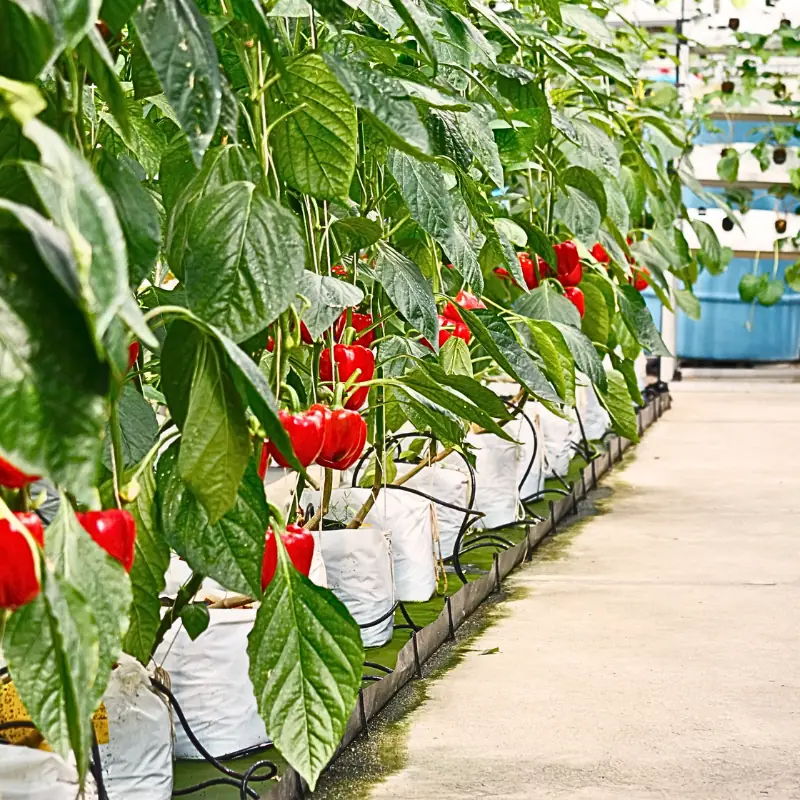
Most calculators assume harvest is a single event. Peppers don’t work like that. This tool helps you cost out the season the way you actually experience it: pick after pick. Labor, packaging, and losses update dynamically as conditions change.
As a result, you get a break-even that reflects how costs stack up over time—not a tidy estimate that collapses when the season gets messy.
Built for Modern Greenhouse Cost Drivers (Energy, Irrigation, and System Overhead)
Greenhouses lean heavily on AgTech innovations, and sometimes IoT Farming Solutions like sensors and logging.
Therefore, your profitability depends on whether you’re allocating and depreciating these costs correctly.
Consequently, this calculator makes those drivers visible and ties them back to the numbers you care about: cost per kg (or lb), break-even price, and profit per unit.
For a current, crop-specific reference on greenhouse pepper pest/disease context and management considerations Canada’s Crop Profile for Greenhouse Pepper is a strong source.
Step 1: Production Scale & Selling Unit (Covered)
Step 2: Structure & Site Preparation (Covered)
Step 3: Transplants / Seedlings (Covered)
Transplant Details
Step 3B: Growing Media / Substrate (Covered)
Step 4: Irrigation & Fertigation (Covered)
Step 5: Fertilizer & Nutrient Costs (Covered)
Step 6: Climate Control & Energy (Covered)
Step 7: Pest & Disease Management (Covered)
Step 8: Support Systems & Trellising (Covered)
Step 8B: Pollination & Fruit Set (Covered)
Step 9: Harvest Labor & Post-Harvest Loss (Covered)
A. Pickers & Labor
Sorting & Grading Labor (Packhouse / Shed)
C. Post-Harvest Loss Override
Step 10: Packaging Materials & Retail Presentation (Covered)
A. Simple Per-Unit Packaging Cost
B. Additional Packing Materials
Step 11: Overhead & Farm-Level Fixed Costs (Covered)
A. Land Costs
B. Insurance
C. Certification, Audits & Lab Tests
D. Other Administrative / Overhead Costs
E. Financing / Interest Costs
Step 12: Transport & Delivery Costs (Covered)
Step 13: Final Summary & Export
Cost Breakdown
Labor Burden / Employer Contributions
| Component | Total Cost | % of Total | Cost per Unit | Visual |
|---|
Cost Breakdown – Pie Chart
Markup & Selling Price
Baseline Cost per Unit:
Selling Price per Unit:
Profit per Unit:
Profit Margin %:
Total Profit (Entire Crop):
Pepper/Chilli Market “What‑If” Layer
Save & Export Results
Help
Calculate Your Delivery Distance Before Pricing Your Peppers
Not sure how far your customer is from your farm? No problem. Before setting your delivery cost in the calculator, you can quickly check the exact distance using Google Maps. Simply enter your farm location and your customer’s address to estimate kilometers or miles accurately.
👉 Use Google Maps: https://www.google.com/maps
Greenhouse Peppers Production Cost Calculator — Frequently Asked Questions

How many peppers does a pepper plant yield on average?
It depends on the type (bell vs hot), how long you keep the crop producing, plant training, and how stable your climate is. In protected culture, a “good” crop usually comes from consistent fruit set across many picks, not one big harvest.
If you’re only getting 10–20 fruits per plant, it often points to stress (temperature swings, poor pollination/vibration, nutrient imbalance, or pest pressure) rather than “bad genetics” alone.
What is the average yield of greenhouse bell peppers—and why do I see so many different units?
You’ll see yields expressed as kg/m², tons/ha, lbs/plant, or boxes per area, which makes comparisons messy. The key is to standardize:
kg/m² is great for greenhouse planning.
tons/ha is common in field/agronomy discussions.
lbs/plant is common for small growers.
When benchmarking, always ask: What plant density? What harvest window length? What % is culled/seconds? Your real profitability comes from marketable kg (or lb), not total fruit produced.
What is the growth cycle of greenhouse peppers—how long to first pick and how long do they keep producing?
In protected cultivation, peppers typically have a vegetative build-up, then a long multi-pick harvest window if managed well.
The practical takeaway: your budget must cover a long season of labor, fertigation, and pest control—and your yield estimate should reflect a ramping harvest curve (light early picks, peak mid-season, then taper).
“Have you ever grown a pepper plant all summer just to harvest 1–2 peppers?” Why does that happen in a greenhouse?
The usual culprits are:
Heat stress (especially hot days + warm nights)
Cold nights (stunted plants, delayed flowering)
Poor fruit set (no vibration/air movement; humidity extremes)
Nutrient imbalance (too vegetative = lots of leaves, few fruits)
Pests (thrips/mites/aphids) reducing plant energy
Greenhouse success is Climate-Smart Cultivation: stable temperatures, stable moisture, and steady nutrition.
Why are all my pepper flowers falling off / dropping without producing fruit?
Blossom drop usually comes from stress more than “lack of flowers.” Common triggers:
Too hot or too cold (especially at night)
Humidity too high/low (poor pollen release, sticky pollen)
Over/under-watering cycles
Excess nitrogen (lush growth, weak set)
Pest damage (thrips are a classic culprit)
Fix the environment first, then fine-tune feeding. This is where simple IoT Farming Solutions (min/max temp + humidity logging) can pay back fast.
Do I need bees or pollinators for peppers in a greenhouse? Will peppers self-pollinate?
Peppers are self-fertile, but in a greenhouse they still benefit from vibration and airflow.
Options include: gentle shaking/trellis tapping, fans, or controlled pollination methods (even simple vibration tools). If your set is weak, don’t jump to “no bees” first—check temperature, humidity, and plant stress.
.
Is this blossom end rot (pepper edition)? How do I prevent it?
Blossom end rot is usually a water management + calcium movement problem, not simply “low calcium in the fertilizer.” Prevent it by:
Keeping soil/substrate moisture even (avoid wet/dry swings)
Avoiding extreme EC spikes (salt stress blocks calcium uptake)
Supporting healthy roots (good Plant/Soil health in soil beds, or clean root-zone in coco/rockwool)
Once fruit shows BER, that fruit won’t recover—focus on stabilizing the crop for the next set.
What’s the ideal temperature for greenhouse pepper production—and what’s the minimum night temperature?
Peppers like warm, stable conditions, and they hate big swings. Cold nights slow growth and delay fruiting; overly warm nights can reduce fruit set and push vegetative growth.
If you’re in a cool region, the question becomes economic: Is heating worth it for the price window you’re targeting? Your break-even often shifts more from heating than from seed costs.
What is the ideal humidity for greenhouse peppers?
Think “balanced”—too humid encourages disease and poor pollen movement; too dry increases stress and can trigger flower/fruit drop.
The best approach is to manage humidity with ventilation, spacing, pruning for airflow, and smart irrigation timing (avoid late-day saturation). This is core Sustainable farming in protected systems: prevent problems instead of chasing sprays.
What EC and pH are people using for hydroponic peppers—and how do EC/pH affect growth?
EC and pH targets vary by system (NFT vs drip), water quality, variety, and climate. Rather than chasing a single “perfect” number, focus on:
Stability (avoid big swings)
Stage feeding (different needs during heavy fruit load vs vegetative growth)
Runoff/solution management (prevent salt buildup)
If plants look “off,” check the basics first: water quality, irrigation frequency, root health, and whether EC is creeping up from evaporation. These are practical AgTech innovations—simple monitoring beats guesswork.
Is greenhouse farming of peppers profitable, and how long till I get my money back?
Profitability depends on three big drivers: market price window, yield stability, and operating costs (especially water, labor, and—if needed—power).
In many SADC settings, the make-or-break factor is risk management: heat spikes, pest pressure, and inconsistent power/water can quietly cut marketable yield.
A realistic plan uses conservative yield, includes loss/grade-out, and stress-tests scenarios (good season vs tough season) before you invest.
Can I use shade net instead of 200-micron plastic, and how often should I water peppers in the dry season?
Shade net houses can be a smart lower-cost step in hot regions—better airflow and lower heat load—but they offer less protection from rain-driven disease and some pests unless you add screening.
For dry-season watering, the rule is: short, frequent irrigations are often safer than long, infrequent soaking—because peppers crash fast under drought stress.
If you can, log temperature and humidity (even basic sensors) to fine-tune irrigation timing—this is affordable Urban Agriculture Technology that directly improves consistency.